Supporting young families in Cambridge
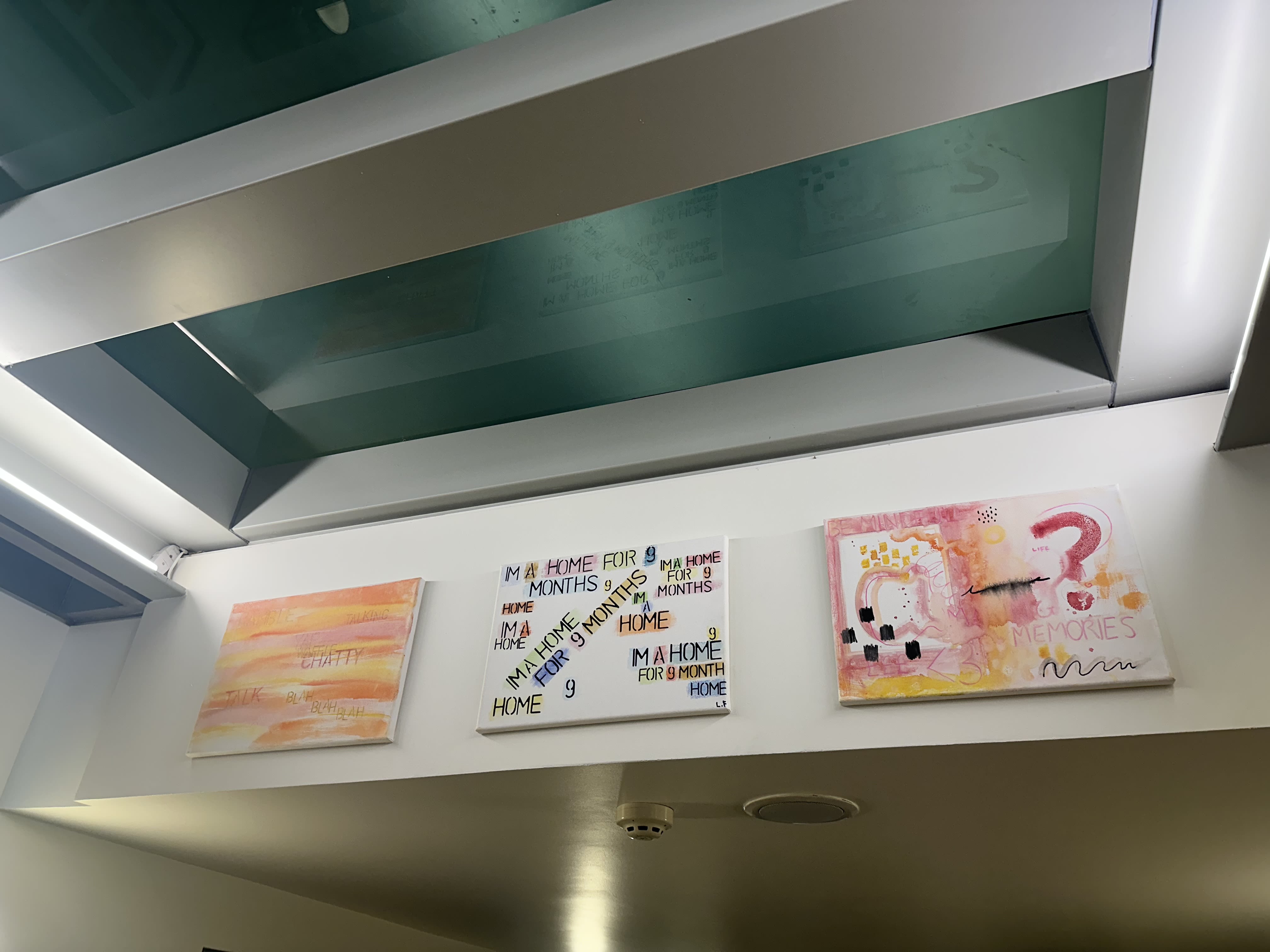

For more than a decade, the University of Cambridge Museums has worked in partnership with local charity Romsey Mill to support its Young Parents programme.
Over 10 weeks each year, a group of young parents, both mothers and fathers under the age of 25, study for a Bronze Arts Award, visiting the different collections and creating their own artwork. Crèche facilities are provided for their babies during the workshops. This is made possible by funding from Arts Council England and Cambridge City Council.
Led by Marie Kennedy, Inclusion Associate: Young People at the University of Cambridge Museums, the project aims to support the wellbeing, creativity and connections of the participants.
“It gives us a chance to engage with young people who might not normally come to the museum for a number of reasons, to share our collections and help the young people build up a number of soft skills, like communication and teamwork.”
The result is a transformative programme that offers young parents, who can sometimes feel isolated, the opportunity to get out of the house in a supportive environment, get creative as individuals, bond as a group and with the wider community, and grow in skills and confidence, ultimately helping them to fulfil their potential as parents.
During the dark winter months from January to March 2025, the project offered a ray of light for three young mothers aged around 20, demonstrating the powerful benefits of creativity on wellbeing.
Exploring the collections

Each year, the programme focuses on a different theme. In previous years, this has included exploring the Fitzwilliam Museum on the theme of ‘the art of motherhood’ – as captured in this short film – and a project on ‘inspirational women’ across the collections, which quickly had to pivot to be delivered remotely in 2021, as Marie recounts in this blog.
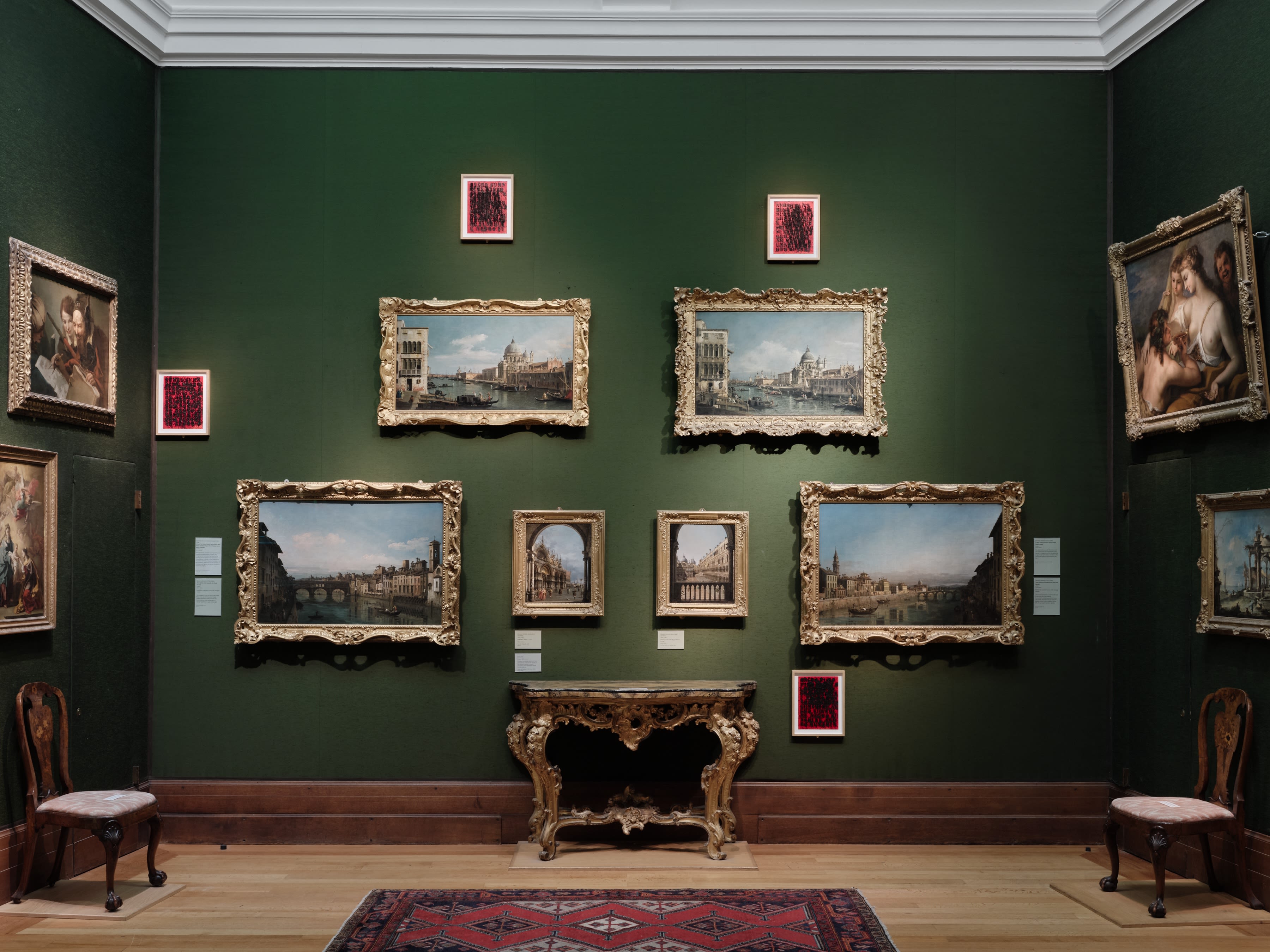
In 2025, the young mothers took inspiration from the Fitzwilliam Museum’s Glenn Ligon: All Over The Place exhibition, which ran from September 2024 to March 2025. Ligon is best known for his text-based paintings, which include the words of writers such as James Baldwin and Gertrude Stein. The exhibition included original paintings, sculptures and prints, as well as unique interventions in the galleries.
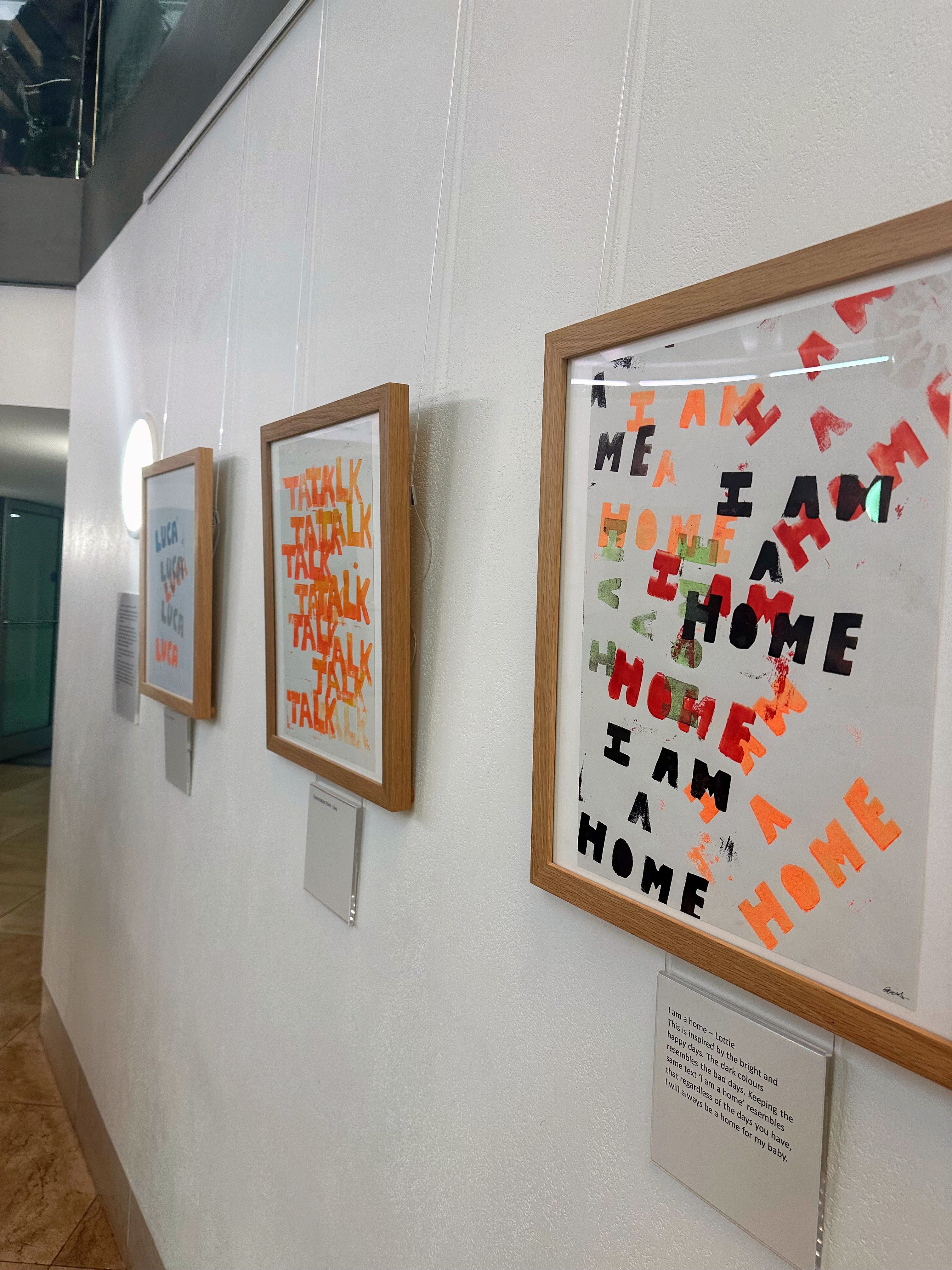
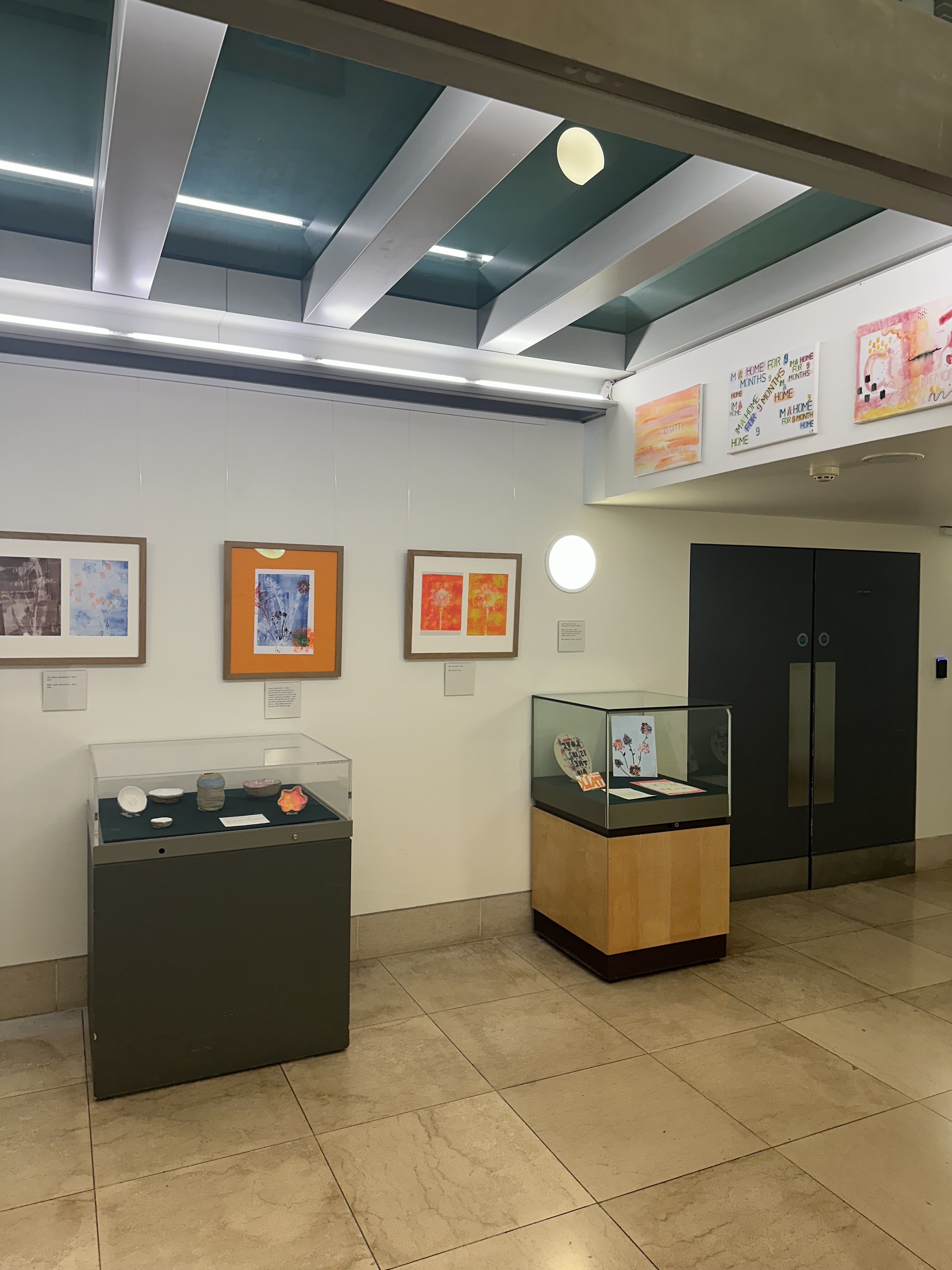
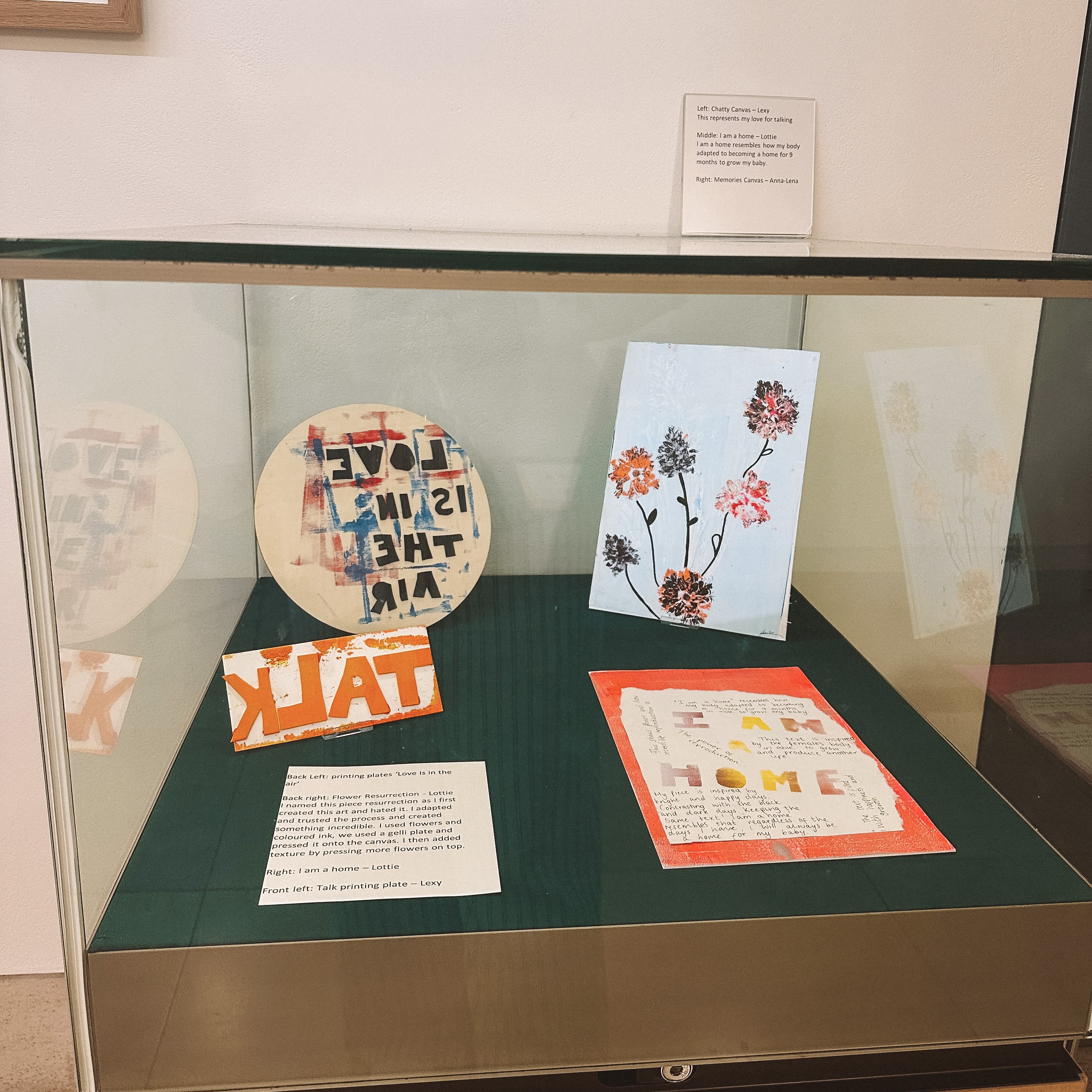
Working with artist Kaitlin Ferguson, the participants drew on Ligon’s focus on flowers and fauna creating their own floral gel monoprints, experimented with ceramics through clay work, and produced text-based artworks focusing on the theme of ‘identity’.
One participant’s artwork is centred around the word ‘Home’, describing how she became a home to her baby for nine months. She explains that the word is repeated in a mix of bright and dark colours to illustrate that, regardless of the bad days, you continue to be that home.
This is one of 15 pieces of artwork featured in the young parents’ own exhibition on display at the Fitzwilliam Museum from April to June 2025.
Marie leaves flexibility in the project timetable, meaning any interests the participants discover throughout their experience can be explored. When participants expressed an interest in the origins and repatriation of objects, Marie recruited curator Eva Namusoke to speak to them about the African collections across the museums and Garden.
“It’s really powerful to be able to follow their interests.”
For Marie, the greatest joy of the project is seeing the participants grow in their self-esteem, skills and confidence, both personal and artistic.
“Ten weeks is quite a nice time to get to know the young people, for them to get to know each other.
“It’s incredible to watch them grow.”

A new perspective on learning

For many participants, the project means a chance to reconnect with an educational environment in a new and positive way as an adult, where they may have had difficulties or a negative experience in the past.
Marie said: “One moment that really touched me was when one of the young women said that she wished school would’ve been like this because she had such a bad experience, and no one ever gave her a second chance, but doing something like this, she felt like she was achieving something. That felt so important.”
In the words of the participant herself: “I never really thought I was arty. I learnt loads here and I learnt that if you just put some time into stuff, you’re better than you think you are at it.
“I feel really proud of myself. It’s quite an achievement for me and I left school quite young, so it’s nice to… have something that I’ve achieved.”
The project reignited an existing love of art and creativity in another of the young mums, who had to drop out of an art-focused course at university due to her surprise pregnancy.
She said: “That was something I really struggled with at university was being vocal in a group and being confident to share my opinions, but I felt so comfortable in this class and it’s kind of reminded me that if you’re working with the right people and in the right safe environment then you can create such beautiful work.”
An “emotional” celebration
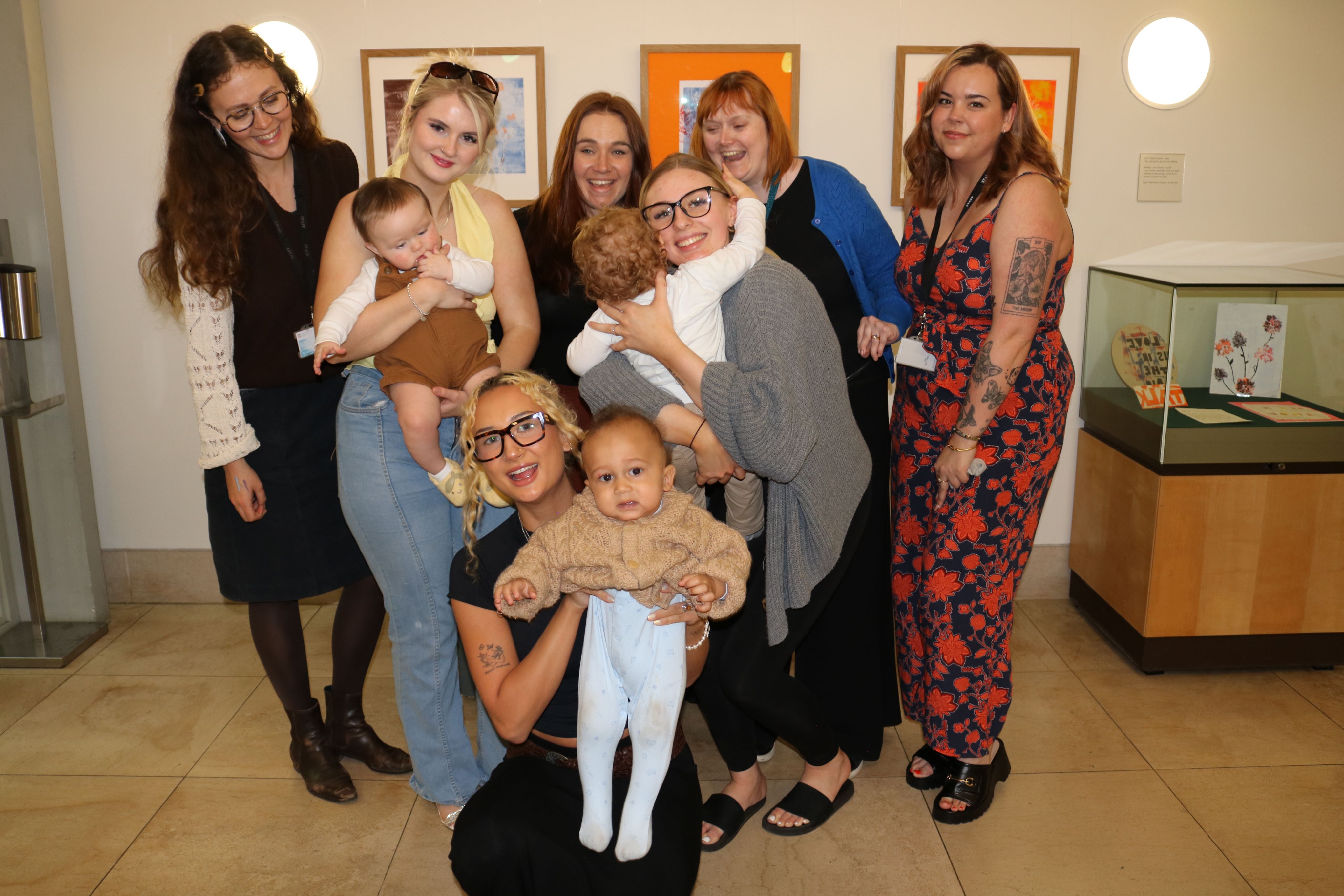
The project culminated in a special celebration event at the Fitzwilliam Museum on Wednesday 9 April 2025. The participants brought along their babies and families to meet staff, see their artwork and celebrate their first public art exhibition.
The Studio where they created their artwork was set up with baby friendly toys and activities, overseen by the Museum’s early years specialist Nicola Wallis, as well as the group’s favourite snacks.
The display, which includes paintings, prints and clay sculptures, showcases the young mothers’ creativity and their intimate reflections on motherhood. It is a unique artistic record of their transition into parents.
Heather Duke, Young Parents Engagement Worker at Romsey Mill, reflected: “The choice of topic - exploring identity - really helped to build friendships between them and give them the opportunity to explore who they were in a supportive space. I think a real gift that the course gave them was deepening relationships with one another and therefore the support they can offer one another as young mothers."
What's next?

The mums are keen to tell museum staff have already shared their learnings with the rest of their baby group:
“We made Mothers’ Day cards Gelli printing, which we learnt here. I’m going to do more museum-focused baby things.”
Another recently brought her partner to the Museum to show them the artwork she studied.
All three have expressed an interest in joining the Museum’s Mini & Me Volunteering scheme, enabling parents/carers to volunteer alongside their young children and act as ambassadors for other family visitors.
One participant reflected: “Oh it’s been amazing. I’ve had so much fun. Honestly, it’s really made us bond with each other and realise what we really enjoy. And it’s good to have just a little time away from our babies and just see what we can do.
“We wouldn’t have probably come to the Museum on our own and it’s really made us get to know the Museum and what it’s about. None of us want it to finish.
“I’m taking away a lot more confidence. I feel like being a young mum… It’s quite hard to explain, but you have that sort of barrier on what people think of you, what you can do, everything like that. But it’s given me a lot of confidence, just to be me and do what I enjoy.”
Find out more about our work
To learn more about Health and Wellbeing programmes across the University of Cambridge Museums and Botanic Garden, please visit our Health & Wellbeing web page.
Find out more about how you can help support our learning programmes
We would be delighted to hear from you if you are interested in supporting the learning programmes and public engagement activities of the Cambridge Collections. Your generosity will help our learning staff to reach the widest possible audience and transform Cambridge for future generations.
For an informal discussion, please contact: collections@admin.cam.ac.uk