It's the National Year of Reading, and what better way to flex your creative muscles than trying out some blackout poetry!
Polar Panoramas artist John Kelly included pieces of text in his Arctic scroll and select phrases in his forensic boxes. In a similar theme, blackout poetry is a form of 'found poetry' using existing text to create a new poem.
If you're a fan of the 'Polar Postcards' we share on social media, or perhaps the stunning landscapes on display in Polar Panoramas, this might just be the event for you!
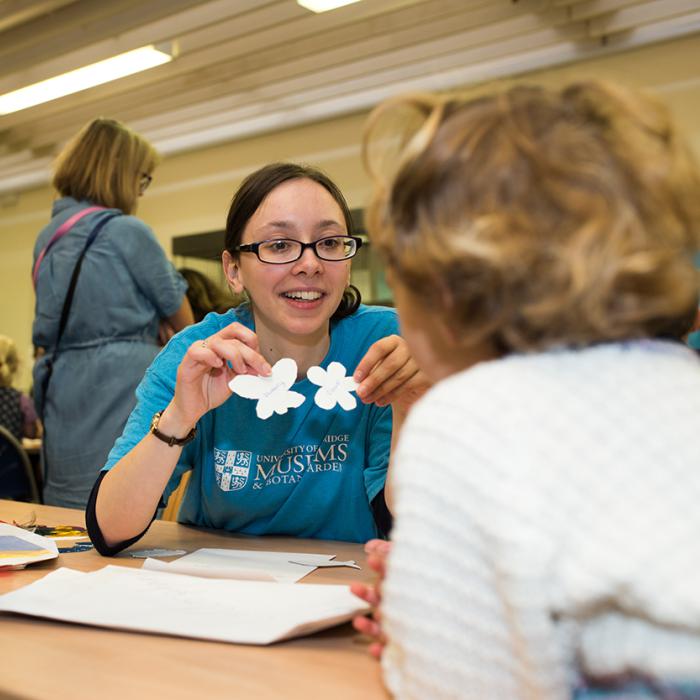
Using recycled postcards and coloured card, we'll show you how to create your own torn paper landscapes to take home.
We'll start with a 15-minute introduction to the method, accompanied by some inspriation images from our archival paintings and photographs. You'll then have 45 minutes to create as many postcards as you wish!
Back by popular demand! Come join for a polar story hour, a chance to listen to a selection of stories from the Arctic and Antarctic regions. Before Kat started at the Polar Museum, she was a primary school teacher, and she loves finding the chance to read her favourite polar books aloud.
The stories will take roughly 30 minutes, then attendees will have the chance to have an 'out of hours' visit to the Polar Museum with a themed trail. We'll also have a special object handling activity to help bring the stories to life!
Please join us for our October Family Day, providing activities for all ages throughout the museum galleries
Exact Programme TBC
Self-led activities at the Courtyard Entrance
Self-led drawing activities, story starters and loose parts play bags will be available to collect during opening hours from the Family Trolley, available in the main Courtyard area opposite the cafe benches.
Suitable for all ages
Join us for a relaxed and social session in the galleries with your baby.
This sensory, playful session will introduce different ways to explore the gallery with your little one.
This session is suitable for 0-18 months.
Bring your little explorer for a story-based journey through the museum. This relaxed and social session will include sensory, hands-on and playful activities.
Please note, the session will move through different galleries and museum spaces. To allow enough space for all participants, we kindly request buggies not be brought into the galleries during the session. A buggy park will be available at the accessible entrance of the museum.
This session is suitable for 18 months – 5 years.
There will be picture books, drawing materials, sensory play resources, as well as tips and ideas to help you enjoy your visit.
All welcome, especially suitable for families with babies and young children.
This month the event will be based in Gallery 3, in the Fitzwilliam Museum.
There’s no need to book, just drop-in.
Join us for Little Stars, a relaxed morning at the Whipple Museum. We’ll have picture books, drawing materials, and sensory play resources. We’d also love to hear what you’d like to see in future activities for little ones at the museum.
There’s no need to book, just drop-in. All welcome, especially suitable for families with babies and young children.
Meet in the Learning Gallery.
This UK Fungus Day, join us for Fungi Field Day at the Botanic Garden to celebrate fungi and their relationships with plants. Come along to learn, engage and play, and discover what we can do to help conserve the fungal diversity around us.
Highlights include:
🍄A range of talks from expert speakers, covering fungal partnerships, their roles in agriculture, and how they inspire art
🔬Science stand with microscopes to discover fungi that live inside plants
Pick up this free trail from the Garden ticket offices to learn about the folklore and mythology surrounding some of our common British trees. The trail will take you on an adventure around the Botanic Garden to learn stories about the magical properties of trees that have been lost to time. Visit all seven boards to learn about each tree and collect a stamp of its magical item. Then head to one of the Ticket Offices to gain the magpies’ golden stamp of ‘mischief’.
Suitable for ages 8+. Children must be accompanied at all times.