At the Whipple Museum we are very proud of our collection of maths equipment, including this cheerful “little professor” calculator. Colour him in and see what other mathematical equipment you can find around you!
We'd love to see your finished results - share your photos with us on twitter @WhippleMuseum or by emailing whipplelearning@gmail.com.
What does Frank need on his polar adventure? What will he eat? How will he stay warm? How will he stay cheerful?
Download our activity sheet to give him a helping hand.
Check out the videos on this page to find out how you can complete a Discover Arts Award.
We're afraid we're not longer able to issue certificates as the videos suggest, but you're welcome to enjoy taking part in this activity!
Follow the step by step instructions and learn how to draw some of the museums favourite animals. You will also get a fact file with more information about your animal
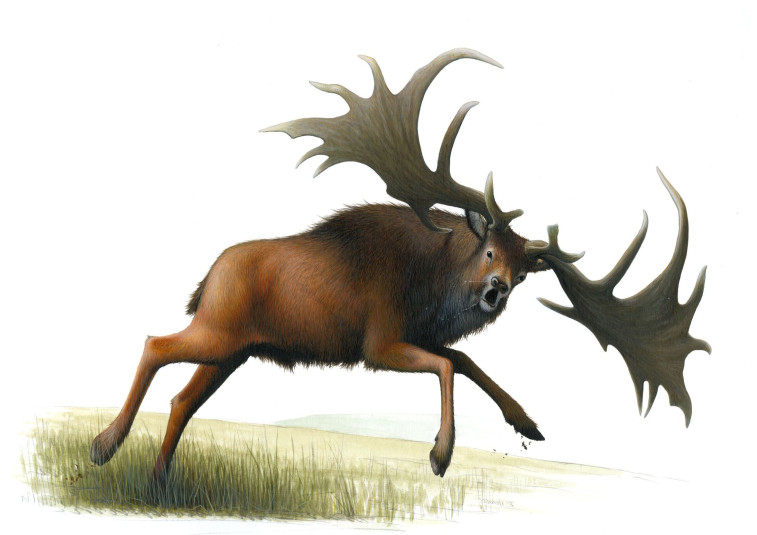 Megaloceros - giant elk from the Ice Age
There are two activities; 'instant' and 'detailed' depending on concentration levels. Kaitlin Ferguson, the artist we work with has but together a very short instruction film, if you press the cc button on the bottom right hand of the youtube screen, you will get subtitles.
Download 'instant' activity sheet
Have you ever wanted to know more about Greek pottery? This is your chance!
In this activity you will chose one of three pottery shapes to decorate inspired by Greek pottery styles. You can use pencil and paper to complete this, but you can also get creative with some coloured pencils or paints.
Petals do a great job of helping flowers get noticed by bees and other pollinators. They are often large and brightly coloured. Scientists are finding out they also have lots of other tricks to help them get spotted.
Download the activity sheet to find out more about how flowers grow and have a go at designing your own ultimate flower.
For this activity you will need:
Did you know there were dinosaurs in Cambridge? Have a look at these colouring sheets to find out which dinosaurs lived here. You can find some of these dinosaur fossils in the Sedgwick Museum
Even more dinosaurs plus a couple of dinosaur wannabes!
Share your dinosaur colouring with us on Facebook and Twitter @Sedgwickmuseum
Glass is very important for scientific equipment. When it’s made into lenses it can help us to see very big things that are far away or very small things that are nearby. How many things can you find and draw that are made of glass? Why is glass a good material to make them out of?
Get inspired by Claude Monet's painting Springtime, painted in his garden in France in 1886.
Explore the different colours and content of the painting in this relaxing activity.
For this activity you will need
Paper
Coloured pens and pencils
Step 1
Make a chart of all the colours you can find in the painting.
Step 2
Now see if you can match things with your colours.
You could go outside for some fresh air!
Step 3