Konstantis Alexopoulos is a doctoral candidate at the Scott Polar Research Institute and a National Geographic Explorer. As a conservationist & climate scientist, Konstantis' research focus lies on the interface between climate, ecosystems, and society, and how the three interact in a changing world. Through his talk, he hopes to transport you to the Greek alpine zone, the fragile beauty of his home country's mountains, their vital importance, and the threats they face.
What is an orrery? Why is the clock chiming 13? Why would you collect and display a set of plaster horses’ teeth, some green spectacles and several hundred pocket calculators?
Join us for a tour of the Whipple’s collection in 10 objects, featuring spectacular instruments, fascinating scientific stories, and links to some of Cambridge’s most famous names.
Meet at the reception point in the Main Gallery.
Rowan Huntley is the artist behind the upcoming special exhibition at the Polar Museum, Through Ice and Fire, which explores the scientific work of Dr Joanne Johnson of British Antarctic Survey.
The Sedgwick Museum is proud to present its new LGBTQ+ tour as part of the University of Cambridge Museums' Bridging Binaries programme.
Did you know that hidden behind a Victorian facade on Free School Lane is the original 1618 hall of Cambridge’s Free School? Join the Whipple Museum’s Curator Dr Hannah Price for a walk up one of Cambridge’s most historic and scientific streets. Along the way, we’ll encounter medieval friars and seventeenth-century schoolboys, James Clerk Maxwell and Rosalind Franklin, and many more secrets...
Drop in. Meet at the Whipple Museum’s front desk.
The Great Comet of 1618 was the very first comet to be studied through a telescope. It was so bright it was spotted all over the world! Whoosh into the Museum’s Learning Gallery for hands-on family fun, and find out more about the comet and other science stories.
Drop in. Learning Gallery.
The Whipple collection contains some astonishing scientific instruments from the 17th century, but how were they used in practice? In this special Open Cambridge talk, the Museum’s Director Dr Joshua Nall will introduce you to a short history of 17th-century instruments and their use.
Drop in. Seated talk in the Learning Gallery.
We will be live online chatting about winter wildlife, with some expert interviews and contributions from our Young Zoologists Club. You'll be able to put your questions LIVE to our experts on the night.
Join via our You Tube channel - the link and more information can be found on our blog.
Winter Wildlife: Ice Age Earth – Museum of Zoology Blog
FREE. Suitable for families and all ages.
Date:
Rowan Huntley, MA is the artist behind the upcoming special exhibition at the Polar Museum, Through Ice and Fire. This talk will give a behind the scenes look at Rowan's artistic processes and the science of creation. The artwork in Through Ice and Fire explores the scientific work of Dr Joanne Johnson and echoes Rowan's deep emotional connection with the natural world.
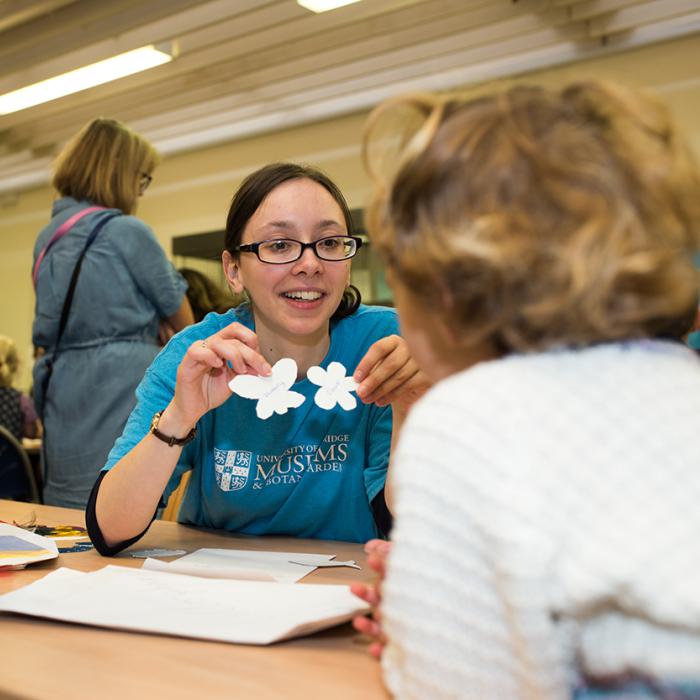
Delivered in partnership with local community organisation Dementia Compass since 2012, our Portals to the World programme aims to support museum learning for people with dementia and their care partner.
These free monthly sessions take place across the eight University of Cambridge Museums and the Botanic Garden. Each session combines a short talk with a gallery tour and object handling, specifically designed for those with dementia. Sessions are relaxed, friendly and supportive.
There are two session choices on offer per month on Wednesdays or Thursdays, 2 to 3.30pm.