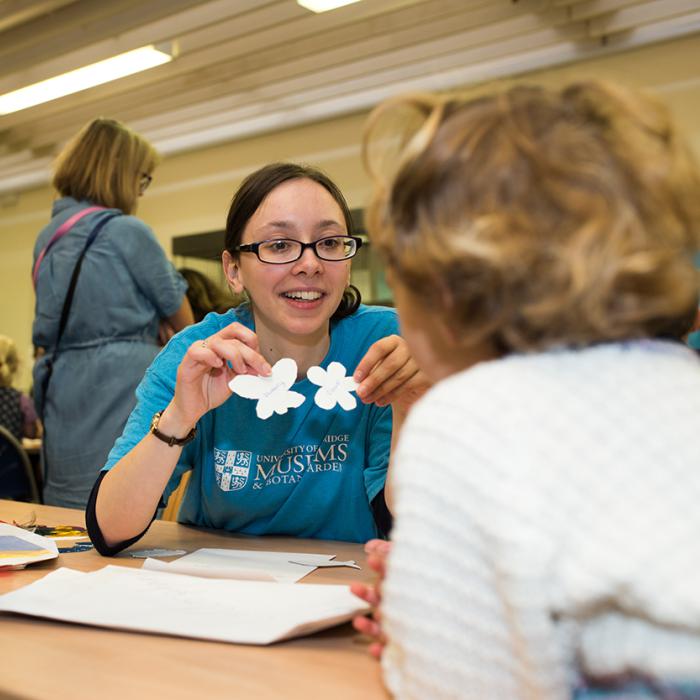
Giant deer, fossil fish teeth, the rocks that built Cambridge... just some of the specimens on display that our staff can't wait to discuss with you. Beware, their enthusiasm is infectious!
Drop into our shop to reserve your free place on the tour.
Giant deer, fossil fish teeth, the rocks that built Cambridge... just some of the specimens on display that our staff can't wait to discuss with you. Beware, their enthusiasm is infectious!
Drop into our shop to reserve your free place on the tour.
Giant deer, fossil fish teeth, the rocks that built Cambridge... just some of the specimens on display that our staff can't wait to discuss with you. Beware, their enthusiasm is infectious!
Drop into our shop to reserve your free place on the tour.
Time-travel with us to the past Christmas celebrations of the Department of Earth Sciences, University of Cambridge. We'll explore beautiful festive cards from Europe, a student party at the Dorothy Café (now a Cambridge bookshop) and hear how Christmas Day was spent by one graduate on Signy Island.
This is a FREE online event, please book your place.
Presenting new and recent paintings, this exhibition is Portia Zvavahera’s first solo exhibition at a public gallery in Europe. Drawing on southern African culture, Christian iconography, traditional European painting and African printmaking, this exhibition will show artworks informed by the artist’s own dreams and the spiritual traditions she grew up with as a child.
2024 marks 150 years since the founding of the Cavendish Laboratory of Experimental Physics. No one could have predicted in 1874 that Cambridge physics would give birth to the atomic age: that the electron and neutron would be discovered, and the atom itself split, on Free School Lane.
Join us to celebrate women Earth Scientists at the University of Cambridge and their trailblazing predecessors. Explore our new display, drop into our mini-talks about the women featured, and browse the museum galleries in a relaxed, atmospheric evening setting.
Free drink on arrival (both alcoholic and soft drinks available).
This is free evening events for adults, booking is essential.
Giant deer, fossil fish teeth, the rocks that built Cambridge... just some of the specimens on display that our staff can't wait to discuss with you. Beware, their enthusiasm is infectious!
Drop into our shop to reserve your free place on the tour.
Giant deer, sea-urchins, fossil fish teeth, plesiosaurs with controversial tails... just some of the specimens on display that our staff can't wait to discuss with you. Beware, their enthusiasm is infectious!
Drop into our shop to reserve your free place on the tour.
Giant deer, fossil fish teeth, the rocks that built Cambridge... just some of the specimens on display that our staff can't wait to discuss with you. Beware, their enthusiasm is infectious!
Drop into our shop to reserve your free place on the tour.