Travelling through the seasons we will explore the history, folklore and culture of three wild plants in bloom (or at least in foliage!) that month. The session will encourage you to search out plants in all seasons and enjoy the history in folklore and culture, and their use for medicines, cooking as well as the many and varied traditional names which help us trace that history.
Trees make up one of the most impressive and beautiful features of our landscape – undoubtedly one of the most important aspects of our natural heritage. The different seasons are reflected dramatically in their changing appearance throughout the year. Late May is a great time for looking at broad-leaved trees: their leaves are fully formed and some will still be flowering. This course is concerned with their identification. We will explore the natural history of our native trees and show you how to recognise individual species.
Water provides very different conditions for plants from dry land. Aquatic plants are often ‘plastic’ i.e. very variable in response to depth and flow. They have a reputation for being difficult to identify. Yet they include some of the most beautiful flowers in our region, as well as inhabiting special habitat like rivers, drains, ponds and lakes (or flooded pits). Owen will seek to demystify aquatic plants and introduce the group to those that occur in our region.
A look at what’s involved in taking beautiful photographs of plants and gardens with Botanic Garden photographer Howard Rice. This course is aimed at those who already enjoy garden photography but want to find out how they can improve by developing a better understanding of some straightforward techniques. There will be a combination of indoor tutorials and practical sessions outside in Cambridge Botanic Garden. You will be encouraged to ask Howard about particular aspects of garden photography that interest you and problems that you might have encountered.
Learn the basics of watercolour on this one day course in the garden. John Wiltshire will introduce you to watercolour technique with simple and effective demonstrations which lead to your own painting in the gardens.
Suitable for all abilities
This morning course is aimed at those with some previous experience of either general biology or of horticulture, who would like to learn more about the hows and whys of flowers. We will begin with a brief discussion of participants’ previous experience, to ensure that the course is pitched at an appropriate level.
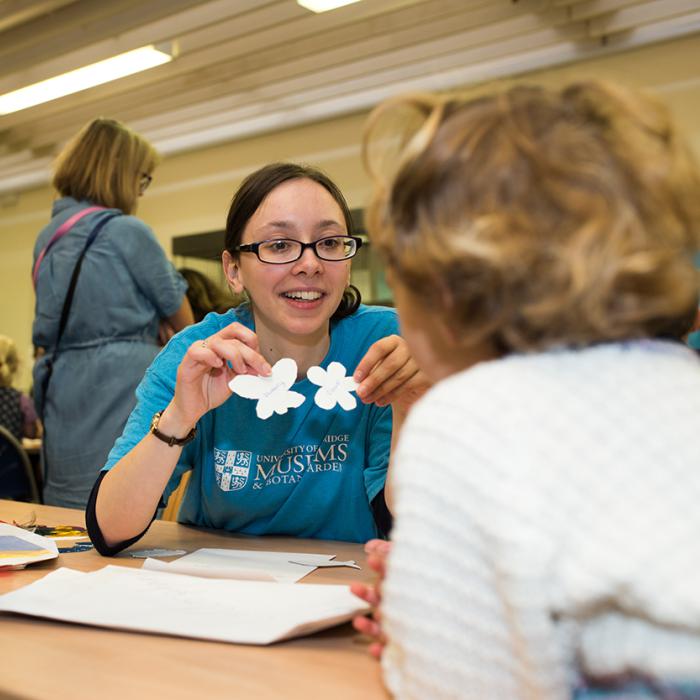
What is your experience of speaking out? What does it feel like to be heard or unheard? What does it feel like to be hidden or silenced? Spend a creative afternoon at the Whipple Museum of the History of Science getting hands-on, and exploring your experiences of power.
Zine making is an exciting and accessible tool that can be used to record personal experiences giving agency to the maker and can represent acts of resistance against power. Zines have been used to protest, resist and encourage collective activism.
Succulents are fleshy, water retaining plants that come in a variety of colours and growth patterns and many different species. We shall visit the glasshouses to see some of them, whilst also studying and drawing a selection of them in the classroom. Starting first with pencils we shall study their growth structure and then paint them in watercolours. Throughout the course Penny will be on hand to provide individual help and advice as needed, or further group demonstrations as required.
The course is suitable for all abilities.
Are you a tippler of tea or a consumer of coffee? Or perhaps it depends on the time of day which you would choose as your botanical beverage of choice? This course will explore how the plants that provide us with our favourite botanical beverages, coffee and tea, have become global commodities. We will follow the journey from wild species through domestication and cultivation to commercial production. How each plant fits into its eco-system, and how humans have interacted and exploited the plant will be considered.
Session 1: Wed 3 May, Session 2: Wed 17 May, Session 3: Wed 31 May, Session 4: Wed 14 Jun
Join Paul Herrington, who will share his top tips and skills to help you to make a start designing your own garden. Across four sessions you will explore design principles, ideas and inspiration, simple surveying and scale drawing, planning for the right plant in the right place as well as developing a layout plan for your own garden and how to ensure year round structure and interest.