Did you know the first bees would have been flying around in the Cretaceous just as ‘Iggy’, our Iguanodon, was snacking on leaves from tall trees? At the Sedgwick Museum, we have two 20million year old honey bees trapped in amber. Found on Yarmouth beach in 1891.
Amy Smith studies bees Plant Sciences in Cambridge. In this activity, Amy shows us how to make a bee-autiful fluffy bumblebee. You will need some card and wool.
To make your fluffy bumblebee, you will need:
It is really unusual for a palaeontologist (scientist who study fossils) to find a complete skeleton with all the bones in the right place. We are more likely to find only a few bones or a jumbled up skeleton.
Putting a skeleton back to together when you know what the animal looks like can be a challenge, but imagine how hard that becomes when there are no more of those creatures alive for you look at. It is a bit like trying to put a jigsaw puzzle together when you don’t have the photo on the box as a guide.
Gravel Hunters is an educational resource that aims to encourage budding explorers of all ages to discover fossils for themselves on their doorsteps. From gardens to car parks and driveways, fossils can be unearthed in flint gravel from all sorts of environments - all you need to do is collect them.
This resource gives examples of some of the most common fossils found in flint gravel.
Kaitlin Ferguson leads a series of activities based on telescopes and exploration. Make your own viewfinder and design your own planet.
Our big range of Look, Think, Do activities encourage children and families to look deeply and thoughtfully at objects and to respond imaginatively through thinking, talking and making together -from Ancient Egyptian neckpieces to coins stamped by protesting Suffragettes.
You can use the shorter Look and Think activities for just a few minutes or spend a bit longer making something fantastic.
Dragons do not only populate the myths and legends of the past, but also the world around us.
Zoology PhD student Tom Jameson takes us on a journey of discovery with the world's largest reptiles.
Learn how Komodo dragons play an important role in regulating and managing the ecosystems in which they occur, and how without them the whole ecosystem is at risk: HERE BE DRAGONS!
Normally found in the krill-rich waters of the Arctic and Antarctic, the humpback whale swims up to 25,000 km per year, including to warmer waters to breed and give birth.
The seasonally-changing songs of male humpbacks echo through the ocean waters. Measuring up to 16m in length and weighing 25-30 tonnes, these large mammals eat krill, which they filter out of the water through hair-like bristles in their mouth called baleen. They are incredibly agile, often swimming near the surface, where they fluke and breach.
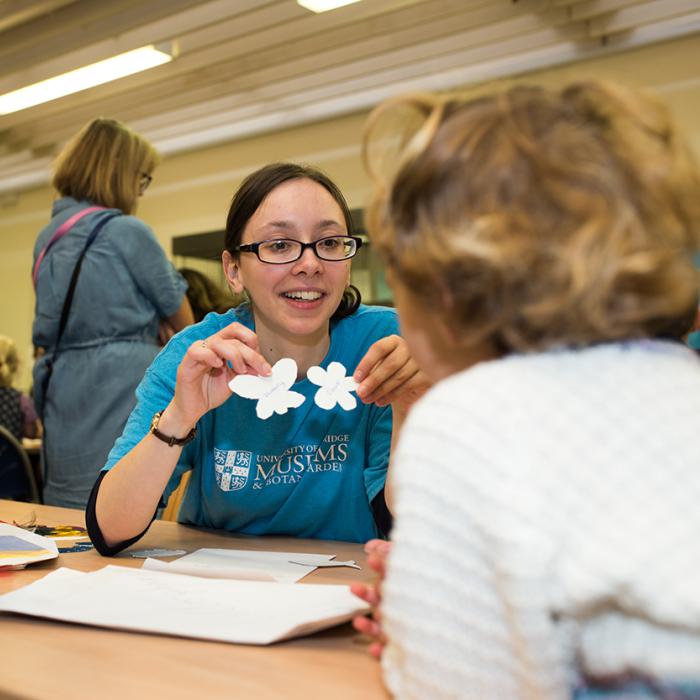
Flowers are nature’s artists. Blues, purples, yellows and reds - they come in an amazing rainbow of colours and shades.
Download this activity to find out the science behind petal colour, make your own petal paint and create a beautiful bouquet of paper flowers.
For this activity, you will need:
It’s estimated that there are about 20 million penguins in Antarctica. When it’s really cold they huddle together to keep warm. The most extreme huddle ever recorded was 19 Emperor penguins within a square metre!
Have a go at making your own penguin. All you need is some paper, and a pen for drawing on the eyes.
Leaves do a very important job for plants - they capture energy from the sun and use it to make food. They're also very beautiful and come in all sorts of wonderful shapes and sizes.
In this activity, find out how to create a shimmering leaf artwork.
You will need: