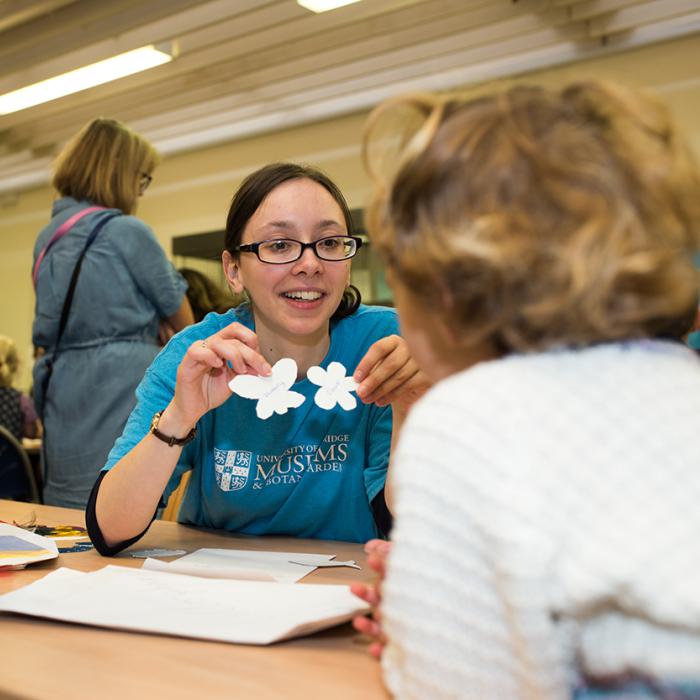
This is a nature walk with a difference – spot the amazing flowers that normally go unnoticed and then put tiny signs next to them so that other people might enjoy them too.
What will you find? It could be an an enormous dandelion sprouting out of somebody’s guttering or a tiny wildflower growing in a crack in the paving.
Share your creations with us on Facebook and Twitter @CUBGlearning #CUBGfamily
Make your own mini garden with bits of plants and natural materials you find in your garden or out on a walk.
For this activity you will need:
- A saucer, tray or large plate
- Compost or soil
- Small toy person or animal
- Plants
- Scissors
Share your creations with us on Facebook and Twitter @CUBGlearning #CUBGfamily
Petals do a great job of helping flowers get noticed by bees and other pollinators. They are often large and brightly coloured. Scientists are finding out they also have lots of other tricks to help them get spotted.
Download the activity sheet to find out more about how flowers grow and have a go at designing your own ultimate flower.
For this activity you will need:
Keep the sun off with this toothsome dinosaur visor.
For this activity you will need:
- Thin card
- Scissors
- Elastic – something like a large rubber band or some string
- Coloured pens, pencils, any other decorations you like
Learn about the lifecycle of a frog and have a go at some froggy activities, including jumping frog origami.
To have a go at these activities and to find out more froggy facts, visit the Museum of Zoology's blog.
Photo by Matt Lowe.
Want to walk around like a dinosaur? You'll need some special dinosaur shoes for that.
Have a go at making your own using this simple template.
Download the instructions and template
The brainchild of Kate Howlett, one of the Museum of Zoology's brilliant PhD students, find out about some of the species you are likely to see through your window or in your garden. Score points with each sighting – the rarer the animal the more points you get. Why not keep a record over the coming weeks and see how the animals you spot changes as the seasons progress.
Download the sheet from the Museum of Zoology's blog.
For further resources and activities linked to this painitng follow this link to our website: https://www.fitzmuseum.cam.ac.uk/work/flowers-glass-vase