Across the University of Cambridge Collections, we have long evaluated our public programmes, generating rich evidence of their value. However, this evidence has often been produced using different methods and terminology. This variation makes it difficult to draw connections across the Collections, tell a story about our collective impact, and communicate that impact in ways that support shared learning, inform practice, and resonate with policymakers.
Over the past year, the central University of Cambridge Museums (UCM) Team has explored how a more consistent approach to understanding and evidencing social value could strengthen the Collections’ policy engagement.
As part of this work, UCM piloted the Bennett School of Public Policy’s framework for measuring social and cultural infrastructure. We have used this as an evaluative lens through which to understand, evidence, and communicate the value generated across the Collections. Social and cultural infrastructure refers to the spaces and structures that bring people together and strengthen the fabric of communities.
Portals to the World (Portals), UCM’s long-running dementia-inclusive programme delivered with Dementia Compass, offered an ideal case study. The programme brings together many of the social and wellbeing outcomes that cultural organisations including museums increasingly seek to evidence.
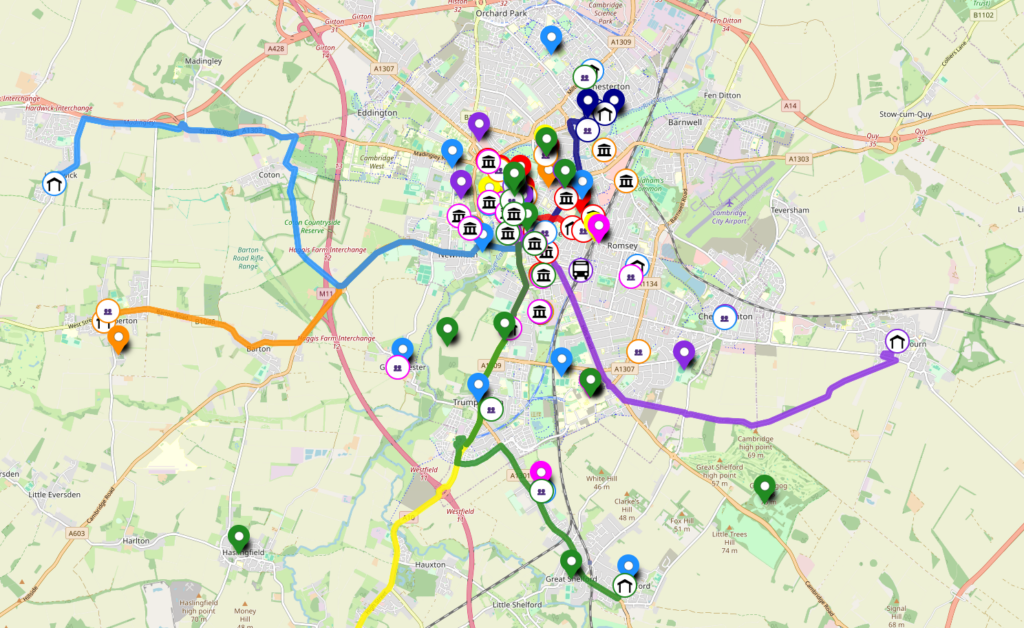
Because it is delivered across across the University’s eight Museums and Botanic Garden, Portals also centred the role of place in enabling these outcomes, allowing UCM to explore how the Collections’ environments, and participants’ journeys to and from them through Cambridge, contribute to the programme’s overall value.
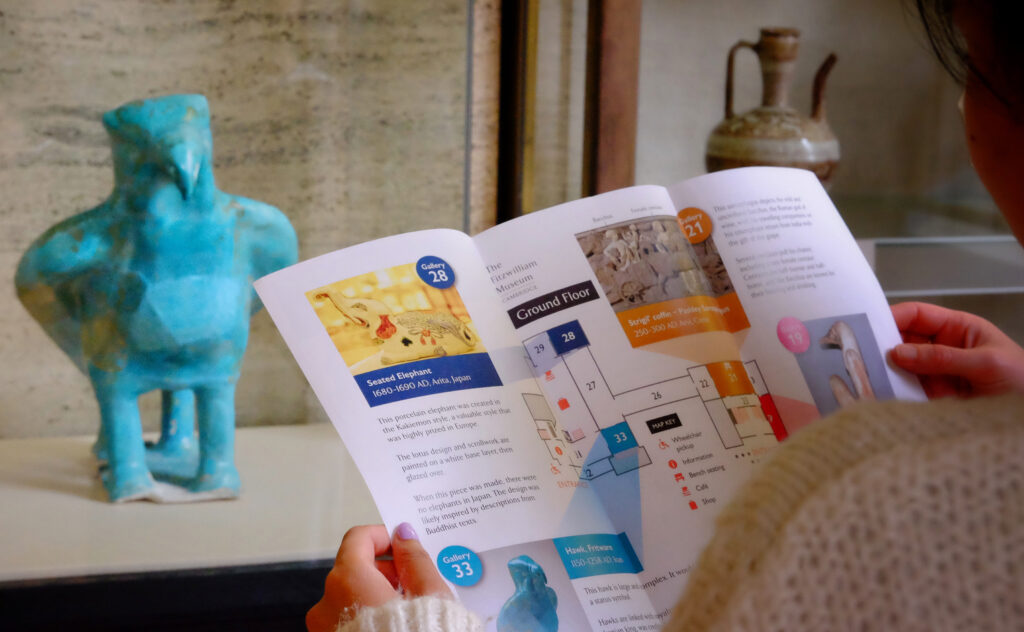
Katie Miller, Social Value Impact Coordinator, managed the project with guidance from the University”s Director of Collections’ Strategy Juliette Fritsch and Head of Collections’ Programmes and Collaborations David Cahill Roots. The project also benefited from the support of UCM Inclusion Associate for Learning Ruth Clarke and Owen Garling, Knowledge Transfer Facilitator at the Bennett School of Public Policy.
Understanding the Evaluation Challenge and Piloting a Way Forward
First, a literature review identified a sector-wide question: how to translate rich evaluative evidence into language that resonates with policymakers.
Participatory and mixed-methods approaches can capture social value that is relational and difficult to quantify, but this evidence is not always readily usable within policy processes. Developing approaches that retain the depth of this evidence while improving consistency and usability is therefore an important next step for the sector.
Next, UCM assessed the digital survey currently used to evaluate Portals. We found that it does not fully reflect the diverse ways in which the programme creates value, including outcomes that extend beyond the sessions themselves. This pointed to the need for an evaluation approach capable of capturing these wider outcomes while also situating Portals within Cambridge’s cultural ecosystem.
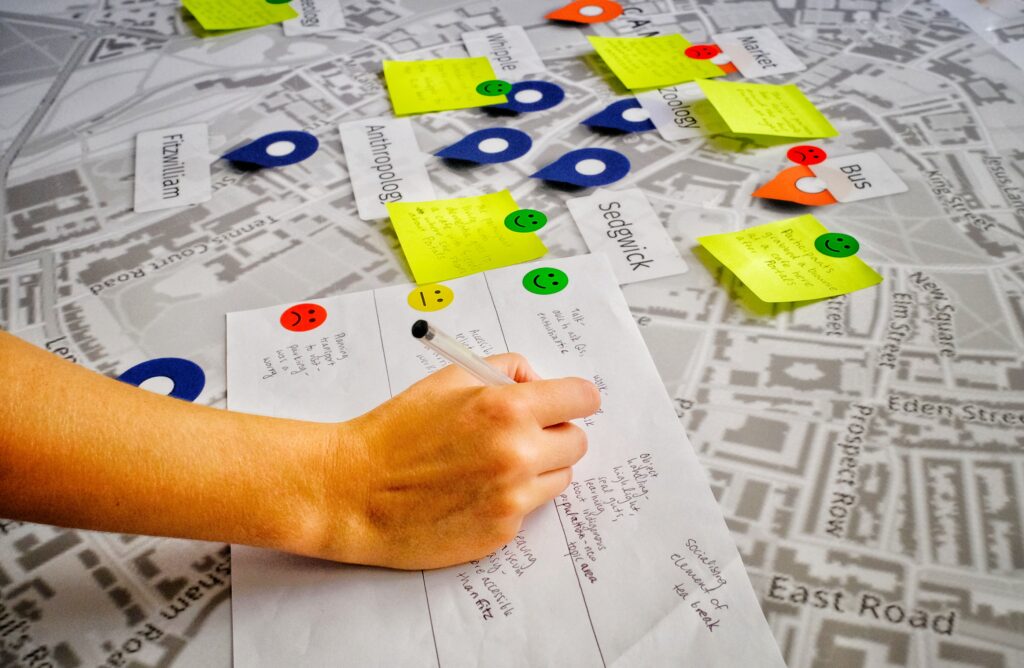
In response, the project applied the Bennett School’s framework to explore whether, through Portals, the Collections function as social and cultural infrastructure.
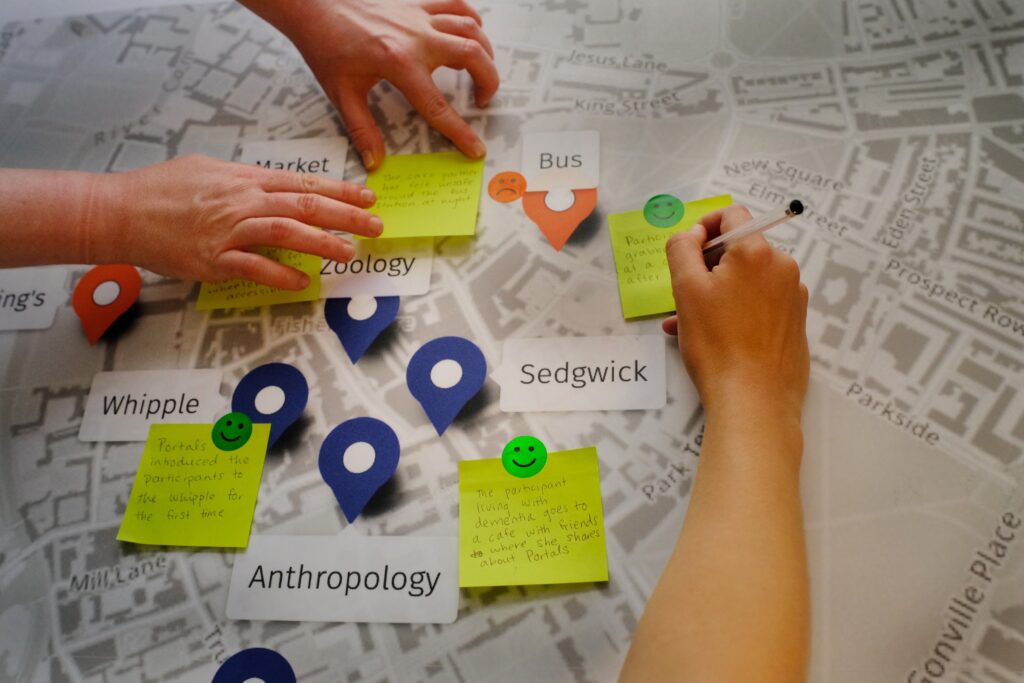
UCM used a mixed-methods approach, co-designed with programme facilitators for maximum accessibility, to capture the full journey of participation. Data collection focused on how participants’ experiences are shaped by their interactions with one another; with facilitators, volunteers, family, and friends; and with the objects and places they encounter through Portals.
UCM drew three main takeaways from the project:
1. Through Portals, the Collections can function as social and cultural infrastructure.
Their spaces, objects, knowledge, and expertise support three key forms of social and cultural value: identity exploration, relationship building, and meaning-making.
Identity exploration
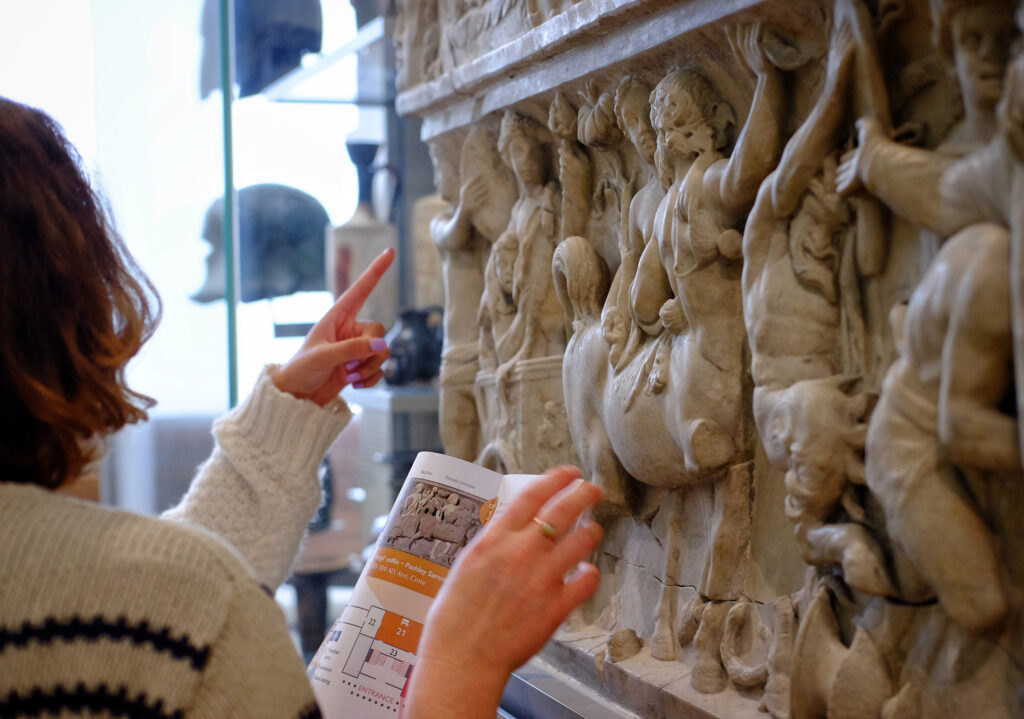
One participant living with dementia shared that seeing textiles at the Fitzwilliam Museum during Portals helped her to remember that her mum used to make clothes for her family. She said, “I just take after her” and spoke proudly of her career in textiles. This suggests that the Collections gave her an opportunity to reconnect with her creative identity and her relationship to her mother.
Relationship building
During a session at the Polar Museum, a participant living with dementia rested while her care partner listened and asked questions. Later, during object handling, the care partner helped the participant living with dementia to hold artefacts. Despite engaging differently throughout the session, both participants remained part of a shared experience.
Meaning-making
While handling an urn during Portals, a care partner recalled a deeply personal memory. Months earlier, at the Fitzwilliam Museum, her late brother-in-law had pointed to a different urn and said, “I want you to make me one like that, for my ashes,” which she did. She said that encountering a similar urn through Portals allowed her to “make that connection with the past.”
2. The Collections’ value is shaped by their wider place-based context.
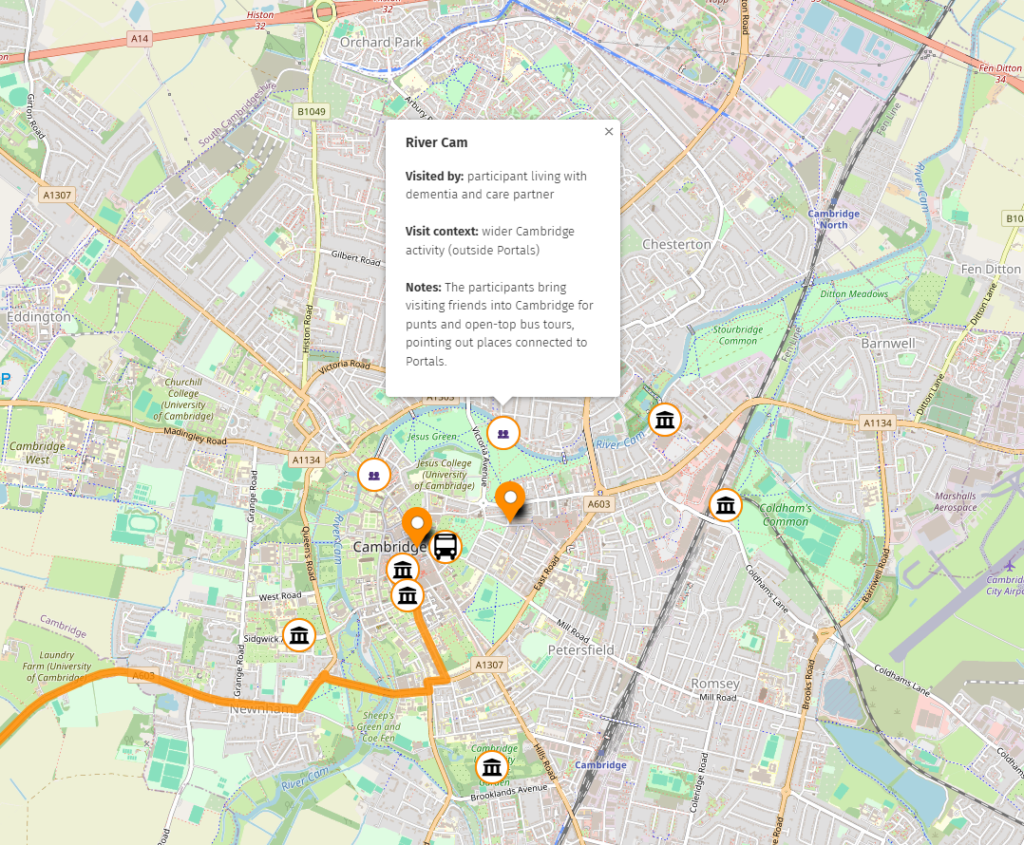
The pilot evaluation showed that the Collections’ value as social and cultural infrastructure depends partly on wider conditions. Participants’ ability to benefit from the Collections’ social and cultural value was limited by barriers such as unreliable transport and a lack of local dementia-friendly provision. However, it was enabled by factors such as familiarity with Cambridge, the pacing of activities during Portals sessions, and positive associations with the University. Understanding Portals as part of a local ecosystem connects participants’ experiences within the Collections to other forms of infrastructure, including Cambridge’s health and transport networks.
3. The Bennett School’s framework could help translate evaluative evidence into policy-relevant language.
By connecting programme-level evaluation with wider questions about place, wellbeing, and participation, the framework could provide a useful way to communicate UCM’s impact to place-based policy audiences. The pilot evaluation findings have implications for three areas of place-based policy: planning, growth, and place; prevention, wellbeing, and ageing; and participation, inclusion, and social connection.
What happens next?
The next step is to test whether the framework helps UCM communicate the Collections’ social value in ways that resonate with policymakers and can inform decision-making. This will also help determine whether the approach could be adapted as a shared language across the Collections. As the Collections explore the framework, UCM aims to serve as a hub for shared learning and practice.
For more information about this work, stay tuned for the project report. You can also explore the Bennett School’s framework for measuring social and cultural infrastructure.
To explore the data in greater detail, visit the Portals map on the Public Map Platform, developed through the University’s Public Map project. It offers a spatial view of how the programme, and the Collections more broadly, shape participants’ relationships with Cambridge.