Earlier this year, the University of Cambridge Museums (UCM) piloted a new programme of work experience for young people with special educational needs and disabilities (SEND).
Our current programme for young people with SEND offers a broad range of creative opportunities, but it has lacked progression for older participants, especially those transitioning into adulthood and employment.
Looking to address these gaps in our provision, we recently trialled an extension to our work experience programme. This aimed to provide young people with SEND the chance to gain an insight into museum careers, and the transferable skills needed for them.
UCM has a strong track record of delivering meaningful work experience programmes. In line with Gatsby Benchmark 6, we collaborate with local schools to help Year 10 and 12 students explore museum careers through week-long immersive programmes.
Recognising that this format may not suit all learners, we developed a tailored approach for students with additional needs. We piloted three sessions with students from Peterborough, planned and delivered to be accessible for young people with autism and other sensory processing conditions.

Designing the programme
This initiative was sparked by a conversation with the Head Teacher of Heltwate School at a Form the Future conference. Her enthusiasm, combined with our commitment to inclusive practice, led to the co-creation of a bespoke programme for eight students, delivered across two museum sites. Working with a supportive partner enabled us to try out different activities and create a person-centered approach, with the school working like a critical friend.
“I just wanted to write and say a huge thank you for the session on Wednesday. We were blown away with how amazing everything was! The work you have put in to making the event such a success is evident, and I am so grateful to you both. For students to engage with people in Museum occupations is rare. It has to be one of the best experiences I have had across my teaching career.”
– Teacher, Heltwate School
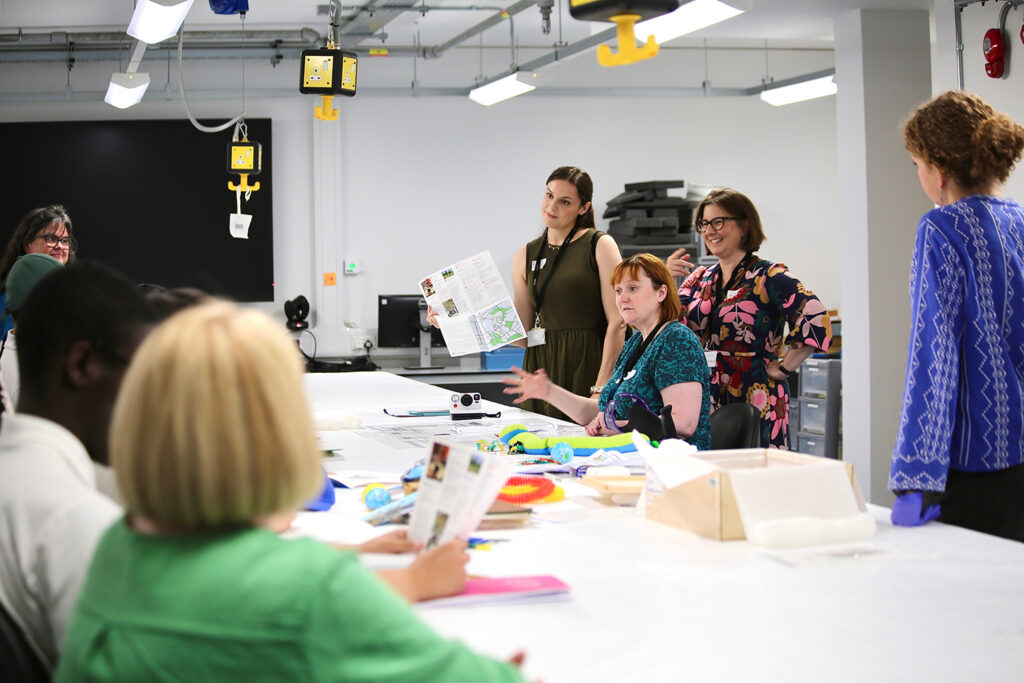
Over three months, students took part in three two-hour sessions focused on lesser-known museum roles. The first two sessions were held at the Fitzwilliam Museum, chosen for its wide variety of roles. The final session took place at the Museum of Archaeology and Anthropology’s Centre for Material Culture, its new lab and storage facility, offering a behind-the-scenes look at museum operations.

What did the sessions look like?
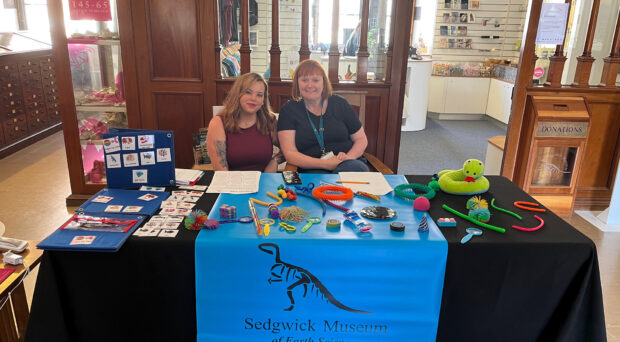
Each session began with a collaborative drawing activity using an image of a museum, encouraging students to identify different roles within the space. This visual tool evolved throughout the programme as students added new roles they discovered. Participants were able to communicate in a variety of ways including widget symbols, drawing, writing, and printing photos or labels. It meant everyone could participate in this activity in a way that felt accessible to them. Every time they met a member of staff, they added an annotation to the image. By the end of the project they had a physical piece of work they had collaborated on to take back to school.
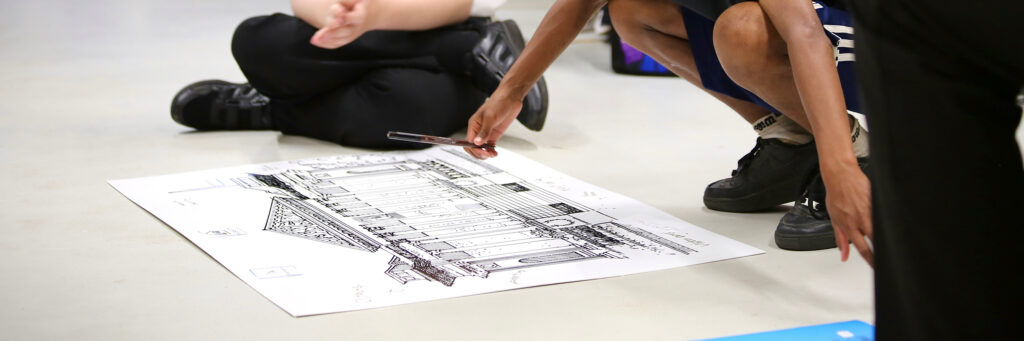
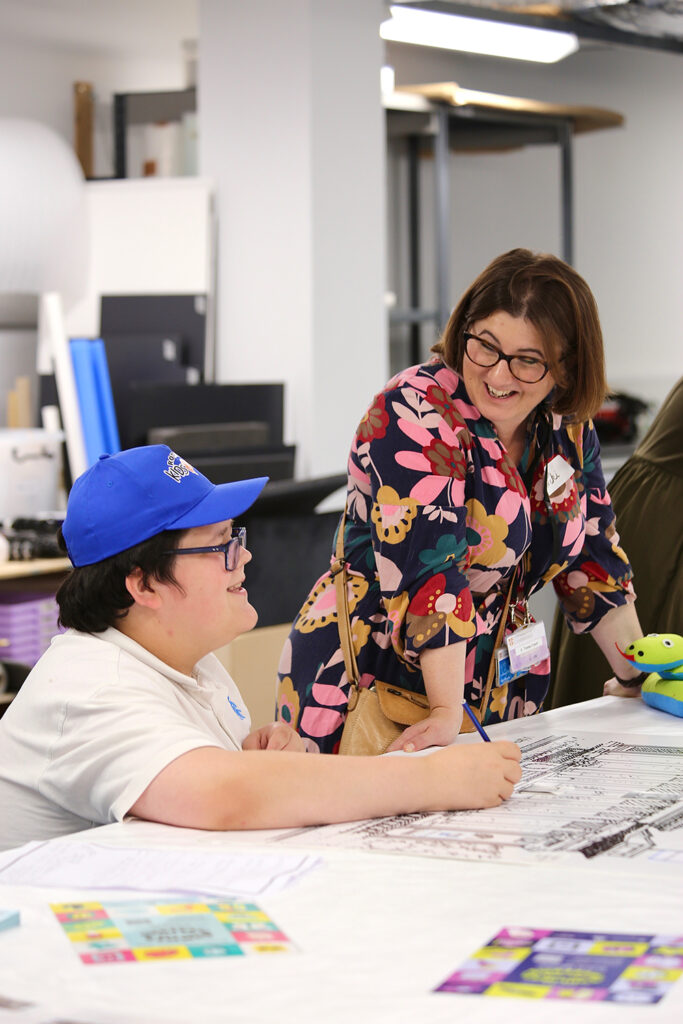
We wanted students to meet staff in a light touch way, so they often encountered people whilst they were doing their jobs. This enabled them to see the jobs happening in action, almost like ‘collecting’ job roles as they explored the museums.
Each session focused on two roles, meeting staff in these jobs and completing related tasks. Examples of activities included:
- designing promotional posters, after meeting the UCM Communications Coordinator.
- practicing visitor engagement techniques with front-of-house staff. One young person’s role play ‘hello’ to a visitor was “welcome to a place that makes you smile.”
- using UV torches to look at museum objects that had been repaired.
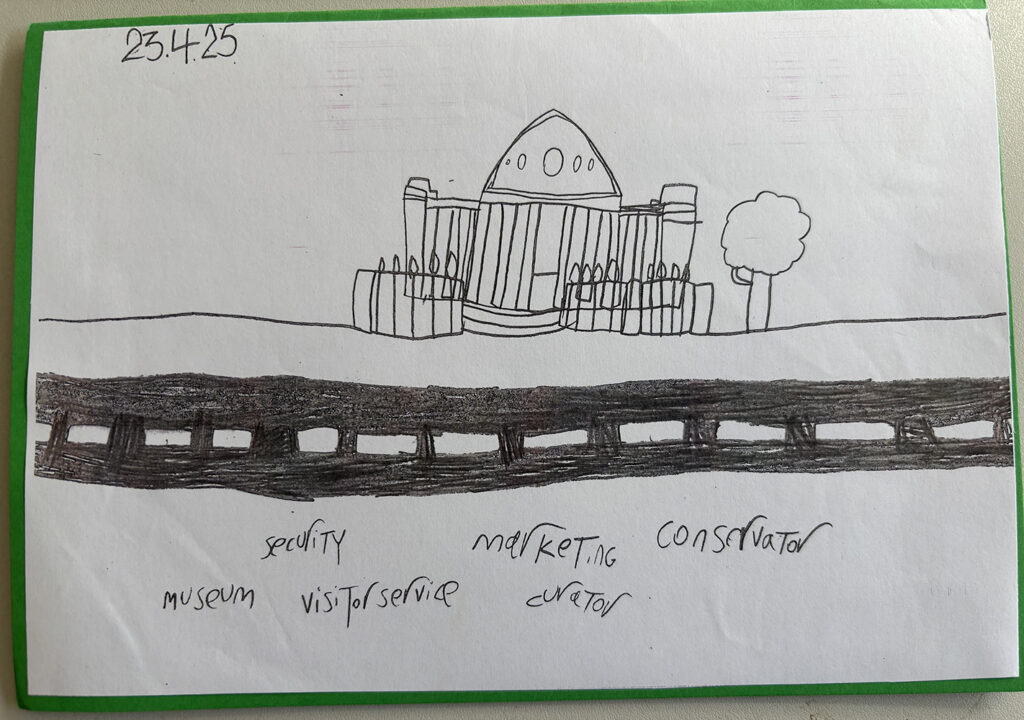
The emphasis throughout was on developing transferable skills in a supportive, hands-on environment. As we got to know the group, we were able to tailor the content to their interests; for example we ended up focusing on Roman objects as that’s what they asked to see. We gave each student a sketch pad and added more art activities as all the young people enjoyed drawing. This was another way for them to engage with the content.
What did we learn?
Flexibility proved essential to supporting student engagement and success. The group was enthusiastic and creative from the outset, thriving in hands-on activities. One highlight was the students composing a song about a staff member, showcasing their creativity and connection to the experience! We had on hand a selection of fidget toys that the students could play with if they needed to. We found this helped some of the participants to focus and self-regulate.
Building on this for the future, we are keen to understand as much about the participants as possible. We hope we can encourage future partner schools to provide us with individual needs assessments, or ‘all about me’ documents, so we can consider in advance how we approach sessions. We think it’s essential to tailor the sessions to their interests and needs, to make the experience as meaningful as possible.

“Thank you Niki and Marie for showing us and experience around the Fitzwilliam Museum. I love the sketch pads [and] the head of security with a lot of keys.”
The sessions were deeply rewarding for both students and staff. We received positive feedback from the school and are confident there is wider interest from other SEND schools. In 2026, we plan to run the programme again, with more museums. We’re exploring the possibility of opening future sessions to families via self-referral. We recognise this will require careful planning to ensure accessibility and success.
We welcome collaboration and ideas for future sessions. If you’re interested in inclusive museum programming or our SEND work experience initiative, please get in touch: info@museums.cam.ac.uk