As the Museum of Classical Archaeology celebrates 12 years of Latin learning, Education and Outreach Coordinator Martha Heemskerk explores what this ancient language offers to children, volunteers and schools today.
Since 2013 the Museum of Classical Archaeology has run a programme of after-school Latin clubs in local state primary schools across Cambridge. In its 12th year, this programme is one of our longest running outreach initiatives and our passion for it is only growing.
The clubs are led by University of Cambridge student volunteers and use Barbara Bell’s popular Minimus Latin Course as a starting point for the sessions. The course is designed to be taught by anyone, with or without prior knowledge of Latin, and has empowered students across the humanities to engage with the classics.
This year saw our largest group of students yet, with 21 students leading Latin clubs to over 80 children across five schools. One of the most impactful changes of the last few years has been to open up the volunteer role to departments outside of the Classics faculty. This has allowed us to not only send more volunteers out to school, but also bring an interest in the ancient world beyond the reach of those who are already equipped with Latin.
The programme isn’t a simple one. From the Museum’s side, we advertise and recruit for the role, and ensure the volunteers are trained in planning, teaching, behaviour management and safeguarding, as well as to manage the logistics of the clubs. For the students themselves, there are many challenges in finding yourself in front of a class of children. Teaching is a skill learnt best over time, and getting to grips with behaviour management, mixed ability classes and finding time to plan the clubs can be a bumpy road.
So why do we continue to do it? Rather than hear it from us, let’s hear from everyone else involved!
What the children say
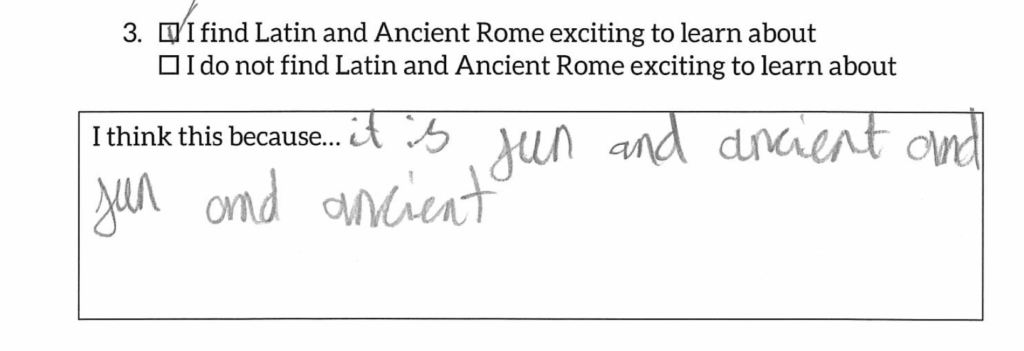
Every year I send the students to their last sessions with short feedback forms for the children in their clubs. Reading the forms is one of my highlights of the whole programme.

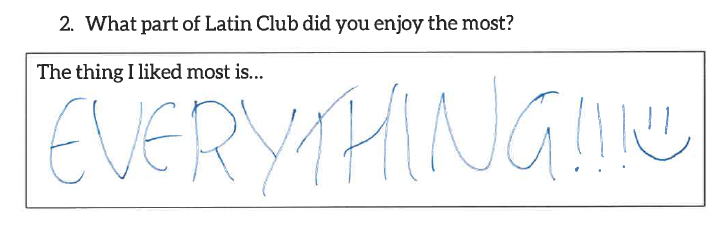
The feedback shows that children enjoy learning new languages*, that their teachers are very nice, that they love learning about myths, that they like quizzing others with their knowledge, and much more. However, most of all, children respond that they enjoy the clubs because they are fun, which is what we really want the ancient world to be.
* Two children would like to highlight that they enjoy languages except French!
What the students say
Being part of the Minimus programme is a big commitment for busy students, but every year the student feedback shows it has been worth the effort.
Volunteers emphasise the energy and enthusiasm of the children as the most rewarding part of the Latin clubs. They enjoy inspiring curiosity about language, myth, and the ancient world, while also valuing the connection formed, with both pupils and each other.
Amongst the benefits, students see the project as a welcome escape from their ‘Cambridge bubble’, as well as gaining new skills in teaching and confidence in themselves and their abilities. Volunteers often apply to us with an interest in pursuing education and many go on PGCE courses.
“I think it’s very important, seeing how excited the kids got about classics reflects how we’re having a big impact on them and their appreciation of classics – more than anything working with the children gives us a renewed appreciation of our subject and is so much fun!”
What the schools say
We would not be able to run the Minimus programme without the enthusiasm and commitment from the local schools. Schools continue to support the Latin clubs because they see how much the children enjoy the sessions and appreciate the hard work that the students have put in. This impact has been echoed by parents, who have described how much their children look forward to the clubs each week, returning home excited and inspired.
To return to my question, why does the museum continue to run Minimus every year? The answer is in all the words above. We want to bring Latin and the ancient world, with all the curiosity and excitement that comes with it, to as many audiences as we can. The Minimus programme has been, and hopefully will continue to be, a big part of this aim.
Find out more about how the Museum of Classical Archaeology is engaging pupils and schools.