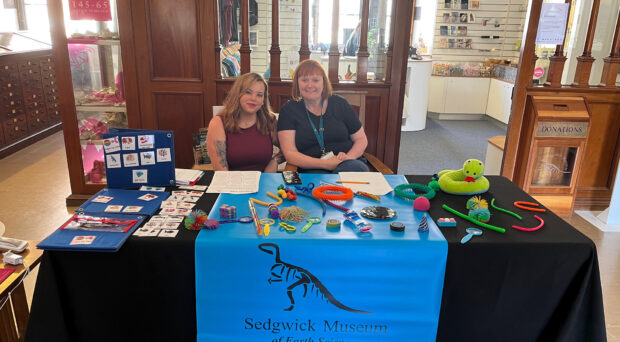
Explore how museum collections and Occupational Therapy have helped people reconnect with identity and purpose after major trauma.
What can a shell, fossil, textile or ceramic object contribute to someone’s recovery following major trauma?
Over eight weeks in summer 2026, Cambridge University Hospitals’ Occupational Therapy Department and the University of Cambridge Museums explored this question through an Occupational Therapy apprentice placement on the Major Trauma Ward at Addenbrooke’s Hospital.
The placement was undertaken by student apprentice Lindsay Sawu and jointly supervised by Cambridge University Hospitals and University of Cambridge Museums. It was the second placement co-designed and delivered through the partnership, following an earlier placement in the Stroke Department.
This time, the focus was major trauma rehabilitation. We explored how museum objects might support people experiencing pain, sensory and cognitive changes, loss of function and significant disruption to their independence, relationships, interests and sense of self.
The placement also asked a reciprocal question: how might Occupational Therapy knowledge strengthen museums’ own health and wellbeing practice?
Finding meaning and connection: an Occupational Therapy perspective
Abigail Aikenhead, Divisional Service Lead Occupational Therapist – Acute Services at Cambridge University Hospitals
As a lead within the Occupational Therapy department, this placement is the next exciting step in the development of our partnership with the University of Cambridge Museums.
By bringing museum collections into the hospital, we have seen patients encounter fascinating and unfamiliar objects. Through those encounters, they find moments of meaning and connection as they come to terms with life-changing injuries.
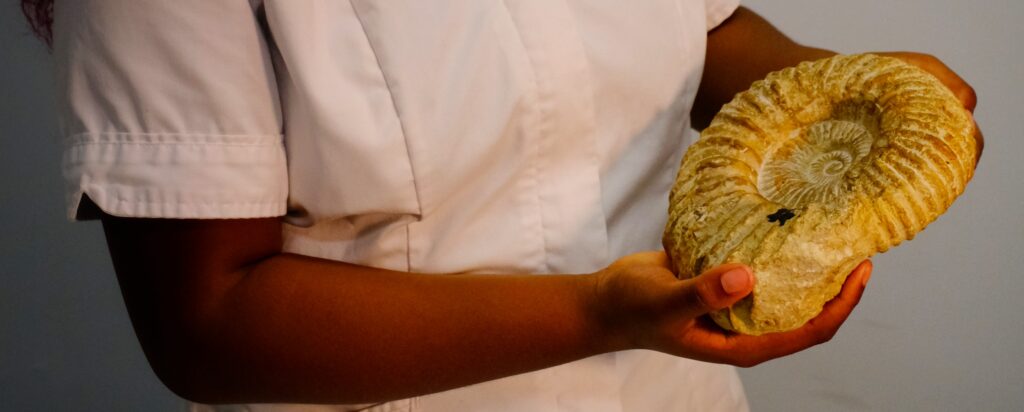
Week by week, patients handled objects ranging from Egyptian scarabs and Peruvian textiles to shells, fossils and ceramics. Touching, examining and discussing these objects prompted storytelling, curiosity and inspiration.
For patients experiencing profound loss following traumatic injury, the collections sometimes offered a route back to their identity as individuals. Objects evoked memories, interests, knowledge and experiences that could easily become overshadowed by injury and hospital life. Within these encounters, we sometimes saw small but important glimmers of hope.
Supported by Lindsay, groups of patients came together away from their individual bedspaces to handle and discuss selected objects. On some occasions, this led into a creative activity such as making pinch pots or printing.
From an Occupational Therapy perspective, this eight-week experience has broadened our understanding of museums as a potential medium for rehabilitation. It has demonstrated a strong synergy between museum practice and Occupational Therapy and shown the therapeutic possibilities that can emerge when our two fields work together.
Bringing the museum onto the ward
Lindsay Sawu, Occupational Therapy Apprentice Student at Cambridge University Hospitals
When people think about museums, they often picture paintings, glass cases with historical objects. During my eight-week placement, I explored how museum collections could also be used as therapeutic resources within rehabilitation.
Occupational Therapists support people recovering from major trauma to regain independence and return to activities that are meaningful to them. This can involve addressing physical challenges, cognitive changes and emotional wellbeing, as well as adapting activities so that people can participate in everyday life.
The placement explored whether museum collections could enhance this process by providing engaging and meaningful starting points for therapy.
Each week, I brought a different handling collection onto the Major Trauma Ward. Patients explored shells, fossils, botanical specimens, ceramics and anthropological collections through touch, observation, the imagination and discussion.
The objects changed the atmosphere. Instead of beginning with a direct focus on treatment or rehabilitation, we began with curiosity.
What started as an object-handling activity often became a space for concentration, memory, storytelling, reflection and social connection. As the groups became more participant-led, my role shifted from directing the session to creating conditions where meaningful interactions could develop.
Different collections, different connections
One of the most interesting aspects of the placement was seeing how different collections prompted many and different responses. Here are a few examples of the conversations had and connections made.
Cambridge University Botanic Garden: gardening, nature and creativity
Objects from the Botanic Garden encouraged conversations about gardening, nature and creativity.
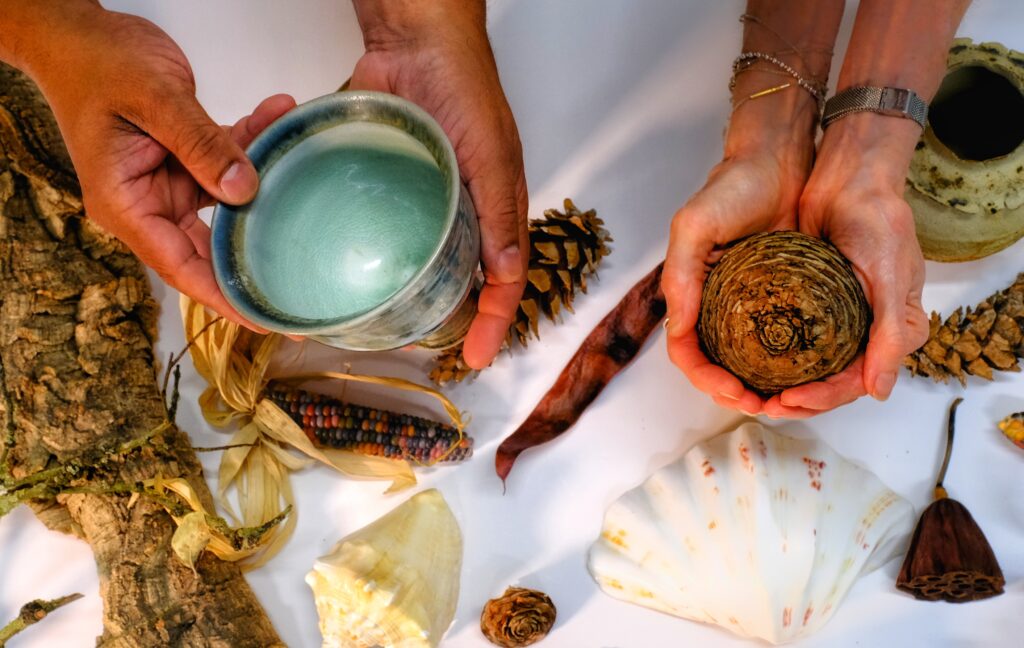
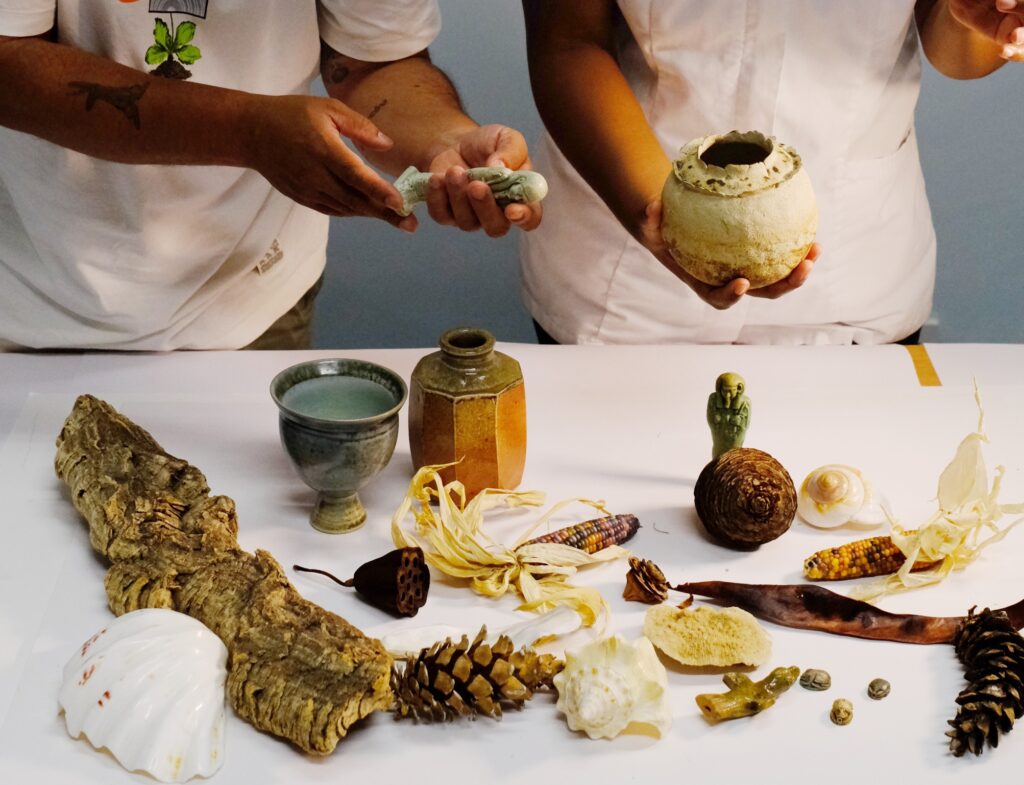
A beaded corn specimen immediately caught one patient’s attention because they recognised it from their own garden. What began as a conversation about an object became a way of exploring an important occupation and part of that person’s identity.
Natural materials such as cork also prompted connections with past hobbies. One patient described using cork to create and paint models.
Sedgwick Museum of Earth Sciences: curiosity and shared discovery
Fossils from the Sedgwick Museum encouraged close observation and shared discovery.
Patients examined the objects and discussed where they might have come from, how old they could be and what stories they might tell. This supported cognitive skills including attention, concentration and problem-solving. It allowed patients to become active participants in shared discovery rather than passive recipients of an activity.
Museum of Zoology: sensation, memory and motivation
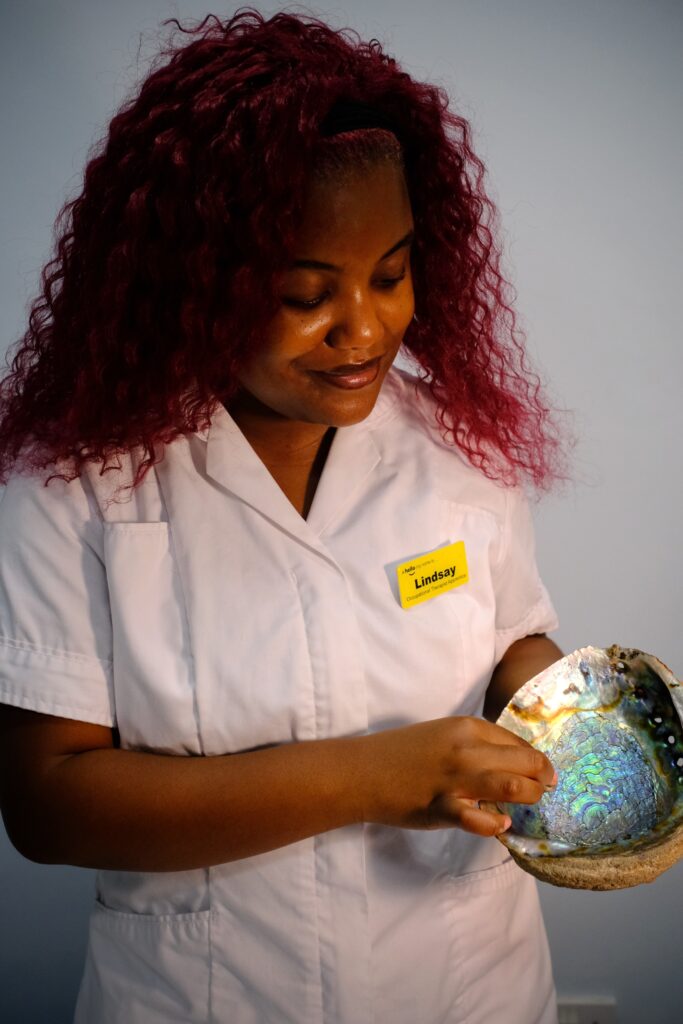
Shells from the Museum of Zoology created some of the strongest personal connections within the group.
They prompted memories of holidays, beaches and family experiences, with one patient sharing memories of visiting Antigua and seeing pink coral sand.
Another patient related strongly to the marine objects because they had previously been a scuba diver. This encouraged sensory exploration through touch and observation, supporting upper-limb movement, engagement and conversation.
As they experienced sensory sensitivity following their injury, the objects provided a meaningful and familiar way to gradually build the trust needed to explore participate in therapy.
They also revealed motivation for recovery that went beyond completing a clinical task: swimming with their daughter, diving again and recovering a valued sense of adventure and independence.
Museum of Archaeology and Anthropology: culture, craft and planning
Objects from the Museum of Archaeology and Anthropology encouraged exploration of culture, materials, craft and creativity.
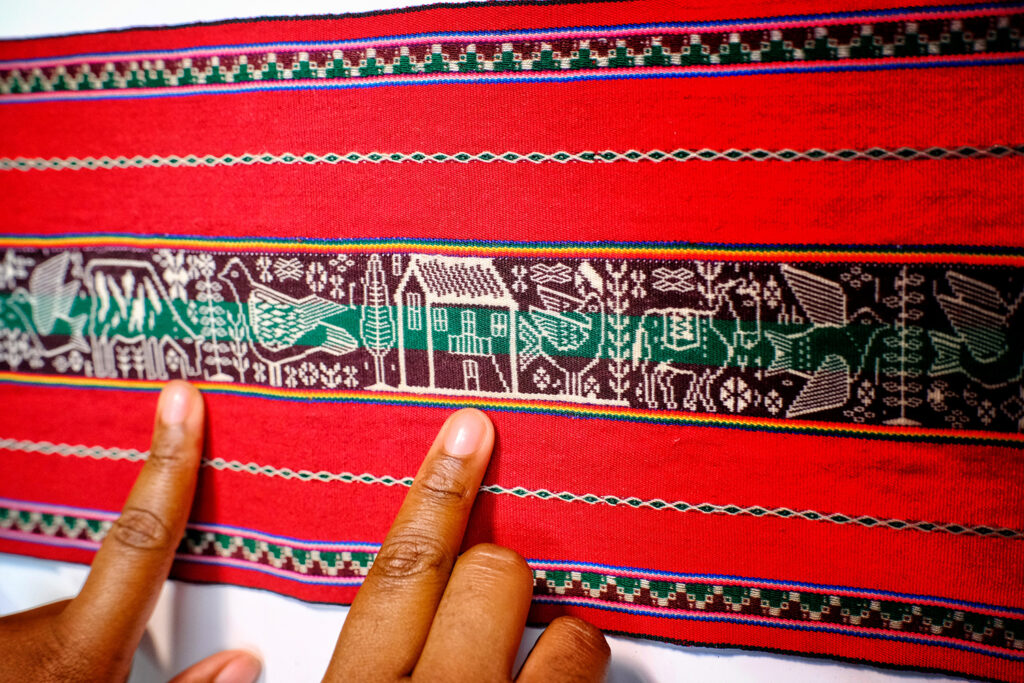
Textiles, bamboo sandals, Egyptian scarabs and shabti figures, and a Roman oil lamp offered many different points of entry.
We used the collection within a graded rehabilitation intervention. One patient helped select and curate objects for a group session, supporting goals relating to planning, organisation, decision-making and social cognition.
The process also highlighted strengths in visual literacy, creativity and thematic thinking.
Fitzwilliam Museum: reconnecting through creativity
A pottery session using ceramic objects from the Fitzwilliam Museum provided another opportunity for a patient to reconnect with familiar materials, skills and a valued creative identity.
The experience reflected the complex and non-linear nature of major trauma rehabilitation, where small changes in confidence, initiation and engagement can be significant.
More than a conversation
The objects were never just conversation starters. They created opportunities for rehabilitation goals to emerge through activities that were personally meaningful.
This particularly meaningful last example involved a patient with a strong creative background. Using museum objects as part of their rehabilitation, they helped plan and curate a group session. The process supported goals around planning, organisation and social cognition, while reconnecting them with an important part of their identity.
It also reinforced an important lesson from rehabilitation: success is not only about completing a task independently. It can also be found in the process, in making a contribution and in reconnecting with valued roles.
Learning from museum practice
Alongside my clinical work, I spent time with University of Cambridge Museums health and wellbeing programmes, including Museum Boost and Museum Encounters.
What struck me was how closely museum practice and Occupational Therapy aligned. Both are concerned with participation, identity, connection and meaningful engagement.
Occupational Therapy brings knowledge of activity analysis, grading and adaptation. Museum practitioners bring collections and facilitation approaches that inspire curiosity, creativity, storytelling and shared exploration.
Together, these approaches can create opportunities that are both purposeful and person-centred.
The placement showed me that museum objects can reveal parts of a person’s identity that may not emerge through traditional assessment questions.
In a busy acute hospital environment, the objects created opportunities for therapists to slow down, listen to patients’ stories and understand more about who someone was beyond their injury.
That understanding can enable rehabilitation goals to become more personal, motivating and connected with the roles, relationships and experiences that matter to the individual.
What did we learn together?
This placement has shown that museum objects can contribute to rehabilitation in ways that are distinctive but closely compatible with Occupational Therapy practice.
Objects supported sensory exploration, attention, communication and social interaction. They also opened routes into identity, confidence, motivation and meaningful occupation.
Following major trauma, an individual’s identity can become dominated by their injury, diagnosis, treatment or discharge plan. The museum encounters created a different kind of space: one in which patients could be knowledgeable, imaginative, curious and skilled.
During our review conversations, we described this as a ‘not patient’ moment, a moment in which someone could appear as themselves rather than being defined principally by illness or injury.
Objects also offered an associative route into what mattered to people. A direct question such as ‘What activities would you like to return to?’ may be difficult to answer when someone is tired, in pain or still adjusting to what has happened.
An object does not demand a predetermined response. A shell might reveal a scuba diver; cork might reveal a model-maker; clay might reconnect someone with skills and expertise. These discoveries can give Occupational Therapists valuable information through which rehabilitation goals can become more personally relevant.
Group work was another important area of learning. In more conventional ward groups, interaction can be focused on the facilitator. The museum objects encouraged people to turn towards one another, exchange observations, share thoughts, feelings, ideas, experiences and build on each other’s contributions. This supported not only conversation but also initiation, attention, decision-making, listening, turn-taking, leadership and flexibility. Learning flowed in both directions.
What’s the next step for this work?
Museum practitioners already use approaches that align strongly with Occupational Therapy, including observation, open questioning, sensory engagement, participant choice, adaptation and person-centred facilitation. Occupational Therapy gave us a more explicit framework for understanding and strengthening this work.
It encouraged us to think more systematically about the demands of an activity, how it can be graded or adapted, and how environmental factors can affect participation. This could help museums make existing good practice more intentional, consistent and easier to communicate and evaluate.
At the same time, our findings suggest that therapeutic value does not reside within a museum object by itself. It emerges through the relationship between the person, the object, the environment, the purpose of the encounter and the skills of the practitioner.
The placement was small in scale, and it would not be appropriate to attribute clinical recovery to individual museum interventions. What we can evidence are the changes observed within particular encounters: curiosity, initiation, sensory exploration, communication, trust, confidence, social interaction and renewed connections with meaningful activities and identities.
The next step is to explore how this work might be developed through a longer, embedded partnership. This would allow interventions to be repeated, relationships to deepen and evidence to be gathered more systematically.
There is also an opportunity to develop shared guidance for museum and Occupational Therapy teams, bringing together approaches to object selection, facilitation, activity analysis, adaptation, environmental conditions and evaluation.
Museum collections have always held stories about human lives. Through this partnership, we are beginning to understand how they might also help people recovering from trauma reconnect with their own stories, with who they have been, who they are now and who they hope to become.